Showing posts with label local. Show all posts

Thursday, April 10, 2014

Bahrija Oasis: The Organic Label and The "Know-Your-Farmer" Local Movement Discussion

If you were to make the decision to go organic or support your local farmer, which would you choose? In many ways, while the organic movement has helped to create that conversation of how important it is to know where your food comes from and how it was grown/processed/made, the ‘label’ itself is worth noting.


Permaculture is a holistic design philosophy and the art and science of creating community eco-systems in which plants, animals, human beings, and all forms of ecological diversity interact to produce a prolific, ecologically-sound, and regenerative system that can support itself and life indefinitely.”

On Tuesday I went to Bahrija Oasis, a permaculture center that has been practicing what it preaches for over a decade. My NGO brought along with us partners for a climate change and agriculture project currently in the works to better understand what an eco-friendly, local permaculture movement looked like in Malta. We spent half the day there learning about the following:

  • Permaculture and permaculture principles
  • Ecological gardening
  • Eco-restoration & biodiversity
  • Rainwater management
  • Forest gardening
  • Composting & compost toilets
  • Holistic approaches to land use
  • Ethical development

It was most certainly an inspiration, especially since my talk of gardens and homesteading causes CK to say, “I’m going to be living on a farm, aren’t I?” Everything that I have been reading about and aspiring to create a career around was what Bahrija Oasis embodied. The people responsible for the farms success combined traditional Maltese farming methods with the principles mentioned. I remember being in awe at how sustainable their practices were. They utilized old materials such as bathtubs, sinks, barrels, plastic bins, and tires. They used solar panels and a windmill for part of their energy use, and they even had a pond for aquaponics!


As we were walking, I asked our guide if he was organically certified, and remembered the look on his face was a struggle of being diplomatic yet critical of the label.

In truth, the organic label as I’ve come to see it in the United States is something that has so many loopholes you might as well be playing billiards; and it seems that parts of Europe is similar. While the definition of organic, in my opinion, should universally mean “(of food or farming methods) produced or involving production without the use of chemical fertilizers, pesticides, or other artificial chemicals”, it has come to mean something else. It has come to mean money for big business. Our guide mentioned that being certified organic seemed to only benefit big farms and industries, and even then the companies could get the certification with only a fraction of their product being organic.


Take Coca Cola for example. It has an organic label. So does Kellogg’s. And they say so in very small print of its origination under the organic logo. Suddenly, organic hasn’t come to mean the definition written above, but something that has become money-oriented and big business-friendly. The label has lost its meaning in the name of profit.

Source

The USDA has changed the playing field for organic certification. Farmers/Businesses who strive for the organic elite title can still use pesticides, fertilizers, and fairly nasty chemicals on their crop. Products can be called organic even when only a portion of the ingredients going to making the product is actually organic. And what’s worse is how much of a strain it is on local farmers. More often than not the signs at farmers markets will say: “Not certified organic, BUT free of pesticides and chemicals, pasture-raised, etc.” In other words, “We’re organic, but the certification process is bogus and we want to continue doing what we believe in.”

But that’s what the local movement is all about: knowing your farmer, knowing your food, and knowing the process. After reading No Impact Man, I learned that a good way to go about this movement was to create a relationship with the local movement, treating it like a blind date. Arrange a visit to the farms and take a tour. Learn their process and ask them about their practices. It’s a form of empowerment, making the decision to choose farmers based on what you believe in.


Bahrija Oasis may not be organically certified, but their methods are what I call organic. They apply the permaculture cycle with care, starting with the soil and ending with the soil. It is symbiotic, taking care of the earth and in turn being able to provide nourishment for yourself and others. While the farm itself is vegetarian, the use of animals is prominent: chickens and other fowl for eggs and bug control; goats for milk, weed management, and fertilizer; worms for nutrient-concentrated soil; and a dog for being a great companion and protector. Compost is a big deal here, as well as the usage of nettle tea as a fertilizer and natural pesticide.


So when our guide asked a fairly important question to us, “Which is more important, the organic label or supporting local movements?”, I knew where I stood. And the food (gluten free AND vegetarian) served at lunch was absolutely divine (much of it coming from the gardens). It was the first time I ever had wild thyme (also from the farm) tea, and I enjoyed it immensely.

Wednesday, February 5, 2014

My Almost Vegetarian Moment in Making Stuffat Tal-Fenek (Rabbit Stew)

I still can’t get over the fact that I’m living on my own and by myself. No parents. No Significant Other. No cats. No plants. Every day I come home and it’s just me to look forward to.

For the last month, I have had to deal with a lot of things. While Skyping and connecting with people online or in person, I have struggled with learning to live with myself. It has been both exhilarating and painful, but I’m starting to see my value and honor who I am as a person. It’s sad that I had to move halfway across the world to finally get to this point, but there you have it.

But then you split them into three categories: emotional, mental, and physical. It’s the mental part of the struggles I wish to share a story with you.


Now, everyone who knows me personally is aware that I am fond of rabbits (see photo to your left for proof). As a child, I grew up with rabbit toys I could put into my pockets or cuddle up with at night. Even the live-in nanny I remember the most had a rabbit for a while. In high school, I had this doodle I made called Super Bunny whenever I wrote in yearbooks or drew in class. Besides having kitties as part of the family, I sincerely hope I get the chance to give a rabbit a loving home when I have the ability to do so.

But here’s the thing: I also enjoy rabbit as a protein source. Rabbit is practically all white meat and the industry of producing rabbit for eating isn’t as industrialized as the others (chicken, beef, pork, etc.). In Malta, it’s a very small farmer sort of deal. For one thing, there just isn’t the space to have a lot of animals on any given farm, and for another, rabbit seems to be only available by demand. You don’t have factory-like conditions for slaughter. You just have single families making ends meet.

For weeks after I came to the island, I was so excited to make stuffat tal-fenek, or the traditional rabbit stew of Malta. But every time I went to the store and inquired about getting a rabbit, they were always out. By chance I went to the Lidl by my work and found the butcher nearby to be open (I still haven’t perfected when stores are actually open… there really isn’t a specific time or day). I walked in to find two young boys and their father behind the counter. The man looks like the stereotypical local butcher: tall, big (like a bear or an ox), muscular, and very friendly. I briefly looked around and asked about rabbit, and he said he had some on hand. Ecstatic and not really observant, I purchased one, and he cut up the carcass while I played peek-a-boo with his little boys (two and four) who were giggling behind the counter.

The rabbit was put into the freezer and saved for a day when I wanted to make it. It wasn’t necessarily labor intensive, merely time consuming. I opened the bag and marinated the thawing rabbit in red wine, garlic, salt and pepper. Again, I didn’t really pay attention or think anything was amiss, and did other things while the meat soaked up the liquid.

After eight hours (I should have done longer like the recipe stated, as the meat was still a little dry for my taste), I cut up the veggies and heated up my large pan to brown the meat. I drooled at the lovely smells of searing meat with the tantalizing aromas of the wine and garlic as I placed them one by one in the pan. And that’s when I realized I should have paid more attention to what the butcher put into the bag instead of letting excitement blur my observations.

He gave me the head.

I stared at the pan for a brief moment in absolute horror, resisting the urge to have the infamously comical “Eek! A mouse/spider!” moment. I looked at the glazed look of the long dead eyes, the teeth with the little tongue lolling to the side, and feeling my stomach turn as I considered the possibility of the brain still intact. And I was still dealing with what I thought was the ears. 

(source)

Yup... definitely ears.

Maybe if I had paid more attention and was aware of the head being included as part of my purchase, I wouldn’t have freaked out or almost lost my appetite. But I wasn’t and I  pretty much did. I was suddenly faced with a borderline-vegetarian experience. That head put a face to the meat I was consuming. It wasn’t just a nameless protein source, but once a living thing with a cute twitching nose, floppy ears, and my one of my favorite animals on the planet. A complete being had been in my freezer for a couple of weeks and I hadn’t known.

This is probably the first time I experienced cognitive dissonance so powerfully. I couldn’t handle having a head browning on the pan and threw it away, its eyes looking up at me from the garbage like a horrible zombie nightmare. Then the idea of having a head in my trashcan was even worse, and so I put it out on the curb and went back inside to resume cooking my now faceless meat. As I put the now browned meat, veggies, and the rest of the marinade in a large pot (note: Maltese recipes tend to make copious amounts of anything), my appetite was practically gone. The tantalizing smells were now nauseating. I felt guilty for how easy it was to simply throw away what made me feel so uncomfortable.

Luckily, I had CK and our mutual friends were online and talking on our group conversation via Skype.
Me: So... I'm strongly strongly considering vegetarianism.
CK: Why?
Me: It's because of this stew I'm making. Rabbit stew. The butcher left the head and I didn't realize it. It... startled me.
CK: Eeew.
Me: Yeah... I don't know if it was due to putting cute fluffy thing and dead thing to eat together or that I was legitimately startled by it. I think I'm experiencing cognitive dissonance...
CK [forever the teacher]: Learning is going to happen!
Me: I actually feel the struggle of turning the rabbit into a faceless chunk of meat now…
CK: I'm sorry.
Me: … that I threw away its head because it made me uncomfortable. This is... so new.
CK: Still doing the stew?
Me: Yes. I'm just feeling reflective. And besides, that would be wasteful… and it smells yummy. But it still affected me in a way I've never felt before. I mean, I've seen meat with the faces. I have. In freezers, and when Uncle R roasts a whole pig. But for some reason, this time it affected me. I am more grateful.
CK: *nod*
JS: It may have rattled you because you weren't prepared for it, like you were with the pig roast. You knew that was coming.
Me: yeah...
Later, after much reflection:
Me: Am I a bad person for choosing to eat meat even though I had this realization?
CK: What do you think?
Me: No. I'm not a bad person. [Sudden realization] CK, the reason why I don't eat meat while we visit one another is because I don't -need- to eat it. I enjoy it from time to time, and I can go without it. It's like you and eating gluten free... it's real food regardless. But I'm starting to see that meat was once a living creature with a gender and a life.
CK: I've never thought ill of you for eating meat, Love.
Me: I know that. I'm just worried about thinking ill of myself, which I'm not.
CK: Just be sure that, whatever choice you make, you do it because it is what feels right to you.
Me: Of course, CK. I'd only make a decision like that -only- because it's for the betterment of how I live my life.
The truth is, at this moment I don’t feel the need to go vegetarian completely because it’s so rare for me to eat meat unless I have leftovers. After my experience, I still ate the leftover chicken I had in the fridge. I still heated up the stuffat tal-fenek after a chilly walk home to warm my core with. I still have milk with coffee. I still use eggs in my pancakes. I still add honey to my tea. When CK and I are together, we make vegetarian and gluten free delights because making the foods we love is a way to connect. When we go out to eat, sometimes the only thing I can eat has meat whereas his only option is gluten and/or soy. We don’t think less of each other for it, and it makes enjoying the foods we can eat together that much more special.

But I get it. I do. I understand that there are a number of studies that try to prove that their diet is The Right Diet. I understand why it’s important to know where your food comes from, whether it’s from an animal or from the ground. I also understand this awareness is starting to alter how we look and feel about what we’re eating. There was a passage I read from Jaclyn Bauer’s (2014) “Marshmallow Dilemma: A Vegetarian’s Argument for Realistic Expectations” that really helped me deal with it:
“In the end, I told her everything only mattered as much as she believed it to matter and cared to think that it did. It is of the utmost importance to establish within your own mind your ideologies and morals, but it is equally vital to be flexible to the extent that you don’t drive yourself crazy and make yourself miserable on account of some external thought, idea or action.

Hold on to who you are, but let yourself transform with the passage of time instead of hanging on desperately to one idea you once held on to.”

My concern with going vegan is turning it into a form of control of my diet, and further restricting nutrients and making it a form of disordered eating. With orthorexia just behind me, it has been a slow but steady process from removing ‘good’ and ‘bad’ as labels for food and simply honoring what my body needs. And I know there are many practices out there that are absolutely terrible in regards to raising, maintaining, and slaughtering animals for sustenance. I’ve seen the pamphlets. I’ve read Upton Sinclair’s The Jungle. But it doesn’t necessarily make me want to become 100% vegetarian/vegan, although I respect and honor those that do take that path. If anything, it wants me to help create a better environment for animals that happen to be used for food: less process, more compassion, and with human caretakers that treat them with dignity and respect. Those photos and videos simply show what cruelty humanity is capable of, and how important it is to create localized farming movements and dispatch factory farming practices. It makes me want to show the importance of quality farming practices, perhaps basing the sales by orders and need instead of killing in mass quantities to maintain uniformity and expected waste or loss. 

And it also depends on what you grew up with. Family pets in certain places are part of the cuisine in others. Some people see animals as part of the labor force or as nourishment, and some see animals with the same rights we have.

Perhaps it’s only typical in the United States, but I don’t think the average person thinks of the cow that became the hamburger, or the countless chickens used for spicy chicken wings. And to be fair, we don’t ask what goes into our fruits and veggies either. But something shifted in my awareness, because everything I’ll ever eat from this point on had a path before it ended up on my plate. It had roots. It had a face. It lived. It died.

And for what went into this dish, animal and plant alike, I am grateful for the sacrifice in nourishing me.

Stuffat Tal-Fenek (adapted from this recipe) 
1 rabbit, (approx 1.5kg, cut in small portions)*
Sea salt and freshly
500ml red wine
1 tsp. olive oil
4 garlic cloves, coarsely chopped
2 Red onions, finely chopped
1 790 g can/5 large tomatoes, finely diced
2 tsp. kunserva (tomato paste)
5 potatoes, cut into small (1 cm) cubes**
3 carrots, coarsely chopped
200 g peas, fresh or frozen
6 bay leaves
Pinch mixed herbs***
Marinate the rabbit eight hours to overnight in the red wine, garlic, salt and pepper in the fridge.****

In a large pot, heat the olive oil, and add the rabbit until slightly brown.
Add the onions, carrots, potatoes and the tomatoes, and pour half of the marinade on the ingredients.
Bring to boil on a high flame for about 15 minutes
Add the remaining wine, peas, bay leaves, kidney and liver and simmer on low heat for about 2 hours, stir occasionally and add some more wine if the sauce begins to dry up.
Serve hot with grated Parmesan cheese.

Makes 6 - 8 Servings.

* Mind the head and organs. While the head startled me, I was excited to have organ meat (such as the heart and liver) since they are so high in nutrients.
** Naturally Maltese Derbies. The original recipe called for peeled and quartered potatoes. While it depends on my mood how big I want the potatoes to be, I hardly ever peel potatoes (unless I’m making gnocchi). I’m of the personal opinion that the peel is the best part.
*** Mixed herbs: parsley, rosemary, thyme, mint, basil, oregano, marjoram, pepper husk
**** I would recommend marinating the meat for at least 12 hours or more. Since rabbit meat is so lean, it can be on the dry side. 

Thursday, January 23, 2014

On the Maltese Derby Potato

My definition of 'local' has significantly changed since I decided to live on an island that is roughly 316 km² (or 122 m² for the folks back home). While the country is a big importer for the various ethnic groups that reside here (the Brits with their tea, the Italians with their espresso, and the plethora of processed goods from all over), the average market holds more local goods than I have ever seen indoors. They sell fresh spinach by the bags, looking freshly picked with soil in the roots and a chance of a snail or two.

At certain times of the day throughout the week, trucks will park with a wide selection of produce to sell. You see potatoes, onions, cabbage, cauliflower, pumpkin, greens, local and imported fruits, cactus pears, eggs, and so much more. As I continue learning about the agriculture in Malta through my internship, I’m starting to understand what goes on behind the scenes, and that the island (much like local farms in the United States) struggles with the competitiveness of cheaply imported goods. It’s surprising, really, because the quality and price of the local foods are much more affordable, easily traceable, and in my opinion, more delectable. 


Since locality is more prominent in the supermarkets, sometimes products will be out of stock until the next shipment. Take rabbit, for example. It took me a number of weeks before I was in a butcher’s shop at the right place and time. On the other hand, local potatoes are always in demand and in supply.

The simple fact of the matter is that the Maltese Derby Potato is an amazing potato. Maybe it's an Irish thing to like potatoes as much as I do, and I definitely have gotten on board with eating the MDP at least twice a week.  It reminds me of the yellow potatoes back in the States, but not as waxy and significantly butterier in taste. It isn’t particularly floury like the Russet/Idaho potato, but it seems like the MDP would be best prepared by roasting, pan-frying, and mashing, and holds its shape in stews. It’s a very good potato species, a close second to my preference for sweet potatoes when I don’t want rice, quinoa, or corn.

Maltese Inspired Home Fries

25 g Butter, salted (easily substituted for a non-animal based fat like olive oil or coconut oil)
2 Onions, finely diced
1 Garlic cloves, coarsely chopped
7 medium/ 1000 g Maltese Derby potatoes, cubed
1 tsp. Sea salt
1 tsp. Sage
1 tsp. Cumin
1/4 tsp. Rosemary
75 g fresh spinach leaves, cut into thick slivers

Toppings (optional):
Parmesan cheese
Fresh Basil and/or dill
Poached eggs

In a large sauté pan, melt the butter on medium heat.
Toss in the onion and garlic cloves and cook until slightly transparent.
Add the potatoes and cover with the lid, checking and stirring intermittently to avoid burning on the bottom.
When the potatoes have softened, add in the remaining ingredients and turn off the heat.
Cover the lid to allow the spinach to wilt.
Serve warm with your choice of toppings.

Makes 4 servings.

Sunday, October 20, 2013

All Work and No Play

The Burt-man recently asked me if I have enough fun. It’s the sort of question that hits you in the face like cold water in the mornings. It wakes you up. It makes you think.


I go to school full time. In grad school terms, that’s nine credits or higher. That’s nine hours in the classroom, six of them being in the late evening. I then devote three days to studying, one for each class, and studying (as well as paper writing and presentation making) can take up to fifteen hours in total. I also work part-time; nothing fancy, just twelve hours three days a week. It takes my mind off school and it’s one of the best jobs I’ve ever had, but it’s still a job. It still takes a lot of energy to be present for the kids as well as my co-workers.

If we add it all together, plus the time it takes to commute, school and work equal to a full-time job. (Mad respect for grad school students who are parents and/or with full-time careers. You guys are the kings and queens of time management.)

Due to the change in my schedule this semester, this meant I had to stop rock climbing for a while. (I just about cried when I told SportRock I needed to freeze my account.) I couldn’t make the time to go in the evenings, because by that point I was exhausted and all I wanted to do was read another novel from Terry Pratchett’s Discworld series. My mornings have been devoted to sleeping eight hours, and simply just chilling out or working on projects. I barely had the energy to do Insanity, let alone to go out and see people and go on adventures. I’ve never been so appreciative of my bed before this semester, or sleeping in general.

I'm so jealous that my cats can literally sleep whenever they want.

It’s the final stretch towards obtaining my Masters Degree, and it has me hyperfocusing so narrowly that I literally have to schedule fun and force myself out the door to have it. Don’t get me wrong; I love my classes and my job. I enjoy the readings, the discussions, and being in the classroom. I cherish the time I have with the kids and my friends at work. But the Burt-man’s question irked me, because it’s true. I’ve forgotten how to have spontaneous fun without the fear of procrastination and motivation looming over my head.

Fun became an expense. I couldn't afford it anymore.


I also have been preparing for my internship in 2014. Yes, I got an internship. In Malta. For a year. I have never been so excited and so terrified for anything before. I will be leaving in early December to settle into this new chapter of my life. So along with the typical week I mentioned, I also have a year of being abroad to consider: what to pack, what paperwork is needed, where I’ll be living, how I will need to budget, etc. I considered doing distance-learning classes along with the internship and my school’s requirements for internship credit in the spring, but decided against it. Why? Because I’m going to be in Malta, that’s why! Because my internship is a forty-hour workweek, and because I want to do my best and still have fun while I’m there.

So with papers and projects coming up (or in one class’s case, a midterm due tomorrow), I am getting myself in the writing groove by writing this post and talking about emotional health.  Guys, everyone needs fun for themselves, even when your schoolwork and your job are things you look forward to every day. You need time (or a day) to yourself to do things for you. That’s why I’m getting myself out of this motivation rut and will set aside time to myself every day to make fun and be creative. If you focus on all the things that have to get done, nothing ever will. Recipes won't happen. Grades will start slipping. Depression and illness will settle in. Work will seem like a chore. 

So I'm having fun this fall. I'm making time and I'm making meals again.

Autumn is my favorite season. I love the crisp in the air, the color changing in the leaves, and the seasonal crops on the shelves and in the farmers markets. Virginia is bursting with apples, squash, and dark leafy greens, and I wanted to honor that with a dish. It’s a casserole that will keep you warm on those rainy days and chilly evenings. I call it the Three Sisters Casserole because it has corn, squash, and legumes in it, but you can most certainly taste the autumn in every bite.

Three Sisters Casserole

Pumpkin Cornbread batter*
227 g Cooked black beans
1 Medium Zucchini, thinly sliced
200 g Kale, coarsely chopped
3 (240 g) Chicken Thighs, cooked and coarsely chopped**
1 Yellow onion, halved and cut into thin crescents
3 Garlic cloves, coarsely chopped
1/2 tsp. Sea salt
Dash of Sage
50 g Parmesan cheese

Preheat the oven to 425°F.
In a medium sized bowl, combined the dry ingredients and then the wet ingredients of the pumpkin cornbread batter and set aside.
In a large pot (or stainless steel wok) on medium heat, pour a tablespoon of your cooking oil of choice.
Upon smoking temperature, sauté the onion, garlic, zucchini, and kale and cook until soft.
Add the beans and chicken and continue cooking on medium-low heat for five minutes and add the sea salt and the sage.
Turn off the heat and sprinkle the Parmesan cheese on top.
Pour the batter over top and bake for 25 – 30 minutes, or until the crust is golden brown and it is cooked all the way through.

Serves 4 – 6.
*Pumpkin Cornbread
90 g Sorghum flour
1 tsp. Baking soda
1 tsp. Unrefined Apple Cider Vinegar
21 g Honey
3/4 tsp. Sea salt
150 g Masa flour
2 Large eggs
15 g Ghee (or melted butter)
250 ml Whole Milk
250 ml Water
200 g Pumpkin puree

Prepare as you would your typical cornbread recipe, which can be found here.

**Vegetarian, you say? No problem! Simply replace the chicken with another 240 g of cooked beans. You can also substitute it with mushrooms, butternut squash, more cheese, or additional veggies.

Friday, May 24, 2013

Locally Known. Virginia Grown.

I get this rush when I go to farmers markets, especially when it’s a market I’ve never been to before. My heart races as I remove the lens cap from my camera and I ask if I can photograph their beautiful displays, fingers itching to pick up business cards so I remember what I’ve bought and from whom. 

(source)

It’s like a mission. A Meals with Morri mission.


Getting back into the blogging groove has proven itself more difficult than I expected. But going on excursions such as these may help in easing my way back into producing recipes and product reviews. After all, I’d been looking forward to May specifically because it was the start of the farmers market season.

What's in season, you might be wondering? I'm so glad you asked.

The scent of strawberries was heavy and intoxicating at the Wakefield Farmers Market. On Wednesdays from two to six, two rows of vendors lay out their fruits, flowers, vegetables, baked goods, meats, dairy products, and honey in loving fashions. It’s a quieter, smaller farmers market, but the people are happy to strike up a meaningful conversation with you. There’s even a booth run by the Fairfax County Master Gardeners for green thumb enthusiasts.


You can find up to thirteen vendors in the Wakefield Farmers Market:

Produce
Kuhn Orchards*
J & W Family Farm
Level Green Farm
Lois’s Produce & Herbs
F.J. Medina & Son Farm

Meat
Stallard Road Farm – grass finished beef, herbs, and jams
What’s for Dinner Now – corn and grain finished pork, beef, sausages, soups, and entrees*

Baked Goods (alas, not the gluten-free kind)
Cenan’s Bakery – breads, croissants, et al.
Sue’s Pies & More – pies, cookies, and other baked goods

Other Products
Red Fox Creamery – homemade ice cream
Massanutten Mountain Apiaries – honey*
Salsa Las Glorias – salsa
Fields of Grace Farm – all natural farmstead cheese

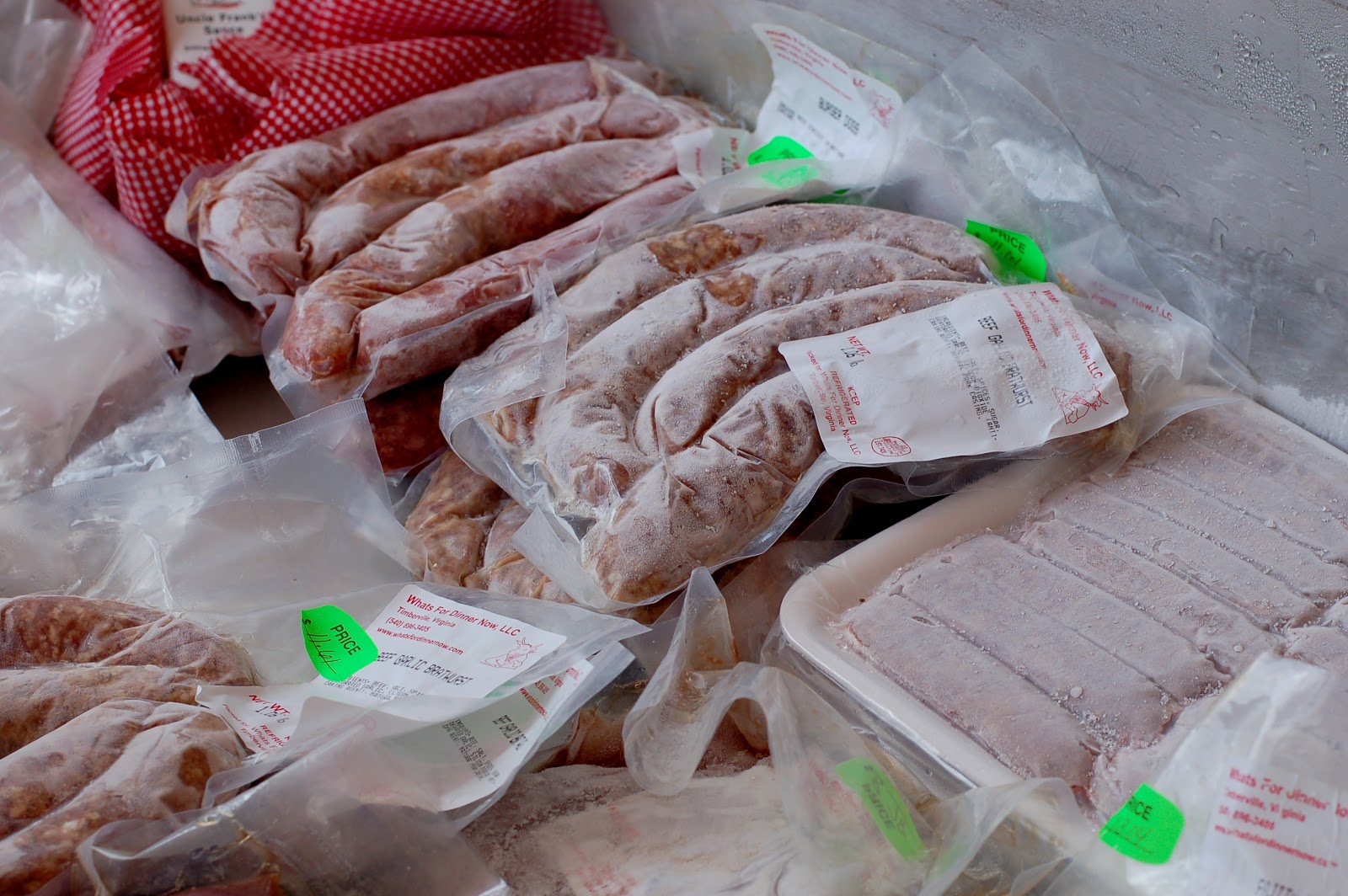
My first stop was at the What’s for Dinner Now booth run by the Stifler family. Their beef and pork are raised in the Shenandoah Valley, and all cuts are individually vacuum packaged. They were a little confused by my request to take a photo of their meat freezer, but were kind enough to lift open the door for me to do so. Many of their sausages as I could see are gluten free and soy free, but some do contain sugar. 


My next stop was the Massanutten Mountain Apiaries booth. I have a sweet spot for honey, especially since it is used in much of my baking, desserts, fermenting, and brewing. While they didn’t have bee pollen, they did have honey sticks, small jars jam-packed with sliced almonds and other nuts in honey, jars with honeycomb just asking to be chewed on like nature’s chewing gum, and even gallon-sized containers should you want to make five gallons of mead. Most of their honey comes from wildflowers, but they also mentioned to have tulip poplar honey from time to time.


We talked about their bees, and I asked how their hives were doing. They said that Virginia was one of those places where the bees aren’t dying off as they are in some places. A silver lining, that, but we seriously need to do something for nature's pollinators.

I finished my farmers market excursion at the Kuhn Orchards booth. I gravitated towards the absolutely stunning apple display. There was an apple called Gold Rush, and if you could imagine the combining of a Golden Delicious with a Honeycrisp, it was an explosion of sunshine on the tongue. There were greens and rhubarb and other delights, but really, any booth with apples will become my favorite.


With a camera full of pictures and a bag full of goodies, I came home content and excited to write this post. I have a lineup of farmers markets to explore now, and I can’t wait to get to know the people behind the products they sell.

For more information regarding farmers markets or CSAs by region, go to VirginiaGrown.com

Tuesday, October 11, 2011

Pumpkin Patch Adventures at Hollin Farms

I had my lunch box and two wonderful people at my side. It was an amazing day.

The Bromance

Hollin Farms is in Delaplane, Virginia, a place I never knew existed. The drive to get there once we picked up our friend BM was almost two hours of countryside and small towns in between. The air was clean, there wasn’t a cloud in the sky, and the weather was perfect for a pair of jeans and a light cardigan. When we arrived, the hill that served as a parking lot was almost completely filled with minivans and trucks. There were a number of families, mostly with little ones who will be celebrating their first Halloween this year, and some had brought their entire clan it seemed. There were a few dogs on a leash amidst the toddlers carrying pumpkins almost too large for them to carry. Older kids were jumping spastically in the moon bounce, running through the corn maze, and screaming joyously with partially bitten apples in hand.


If there were any more reasons to love this time of year, Hollin Farms provided them in spades. The pumpkin patch itself spread across the side of a hill, acres upon acres of various types and sizes were still attached to the vines that crisscrossed over each other, their large yellow flowers in bloom. It was the first time I’d ever seen those flowers in person, though I goggled at their use in recipes often, and I am kicking myself for not taking a bunch along with my other pickings.

Turks Turban

One thing is certain, however. We’re going to make visiting this part of Virginia a seasonal tradition.  


There is something significantly different in the taste of an apple right from a farm versus the one you get at a supermarket. I’m not particularly fond of Golden Delicious apples, but the ones at Hollin Farms were beyond extraordinary. Crisp, tart, sweet, and meaty, this is how an apple should always taste. Between the boyfriend and myself, we have a peck and a half of apples, and surprisingly cheaper to buy than it would have been at a market. The York is my new favorite apple because of that visit, and I suggest you try one for yourself.

Photos of me eating, courtesy of the boyfriend

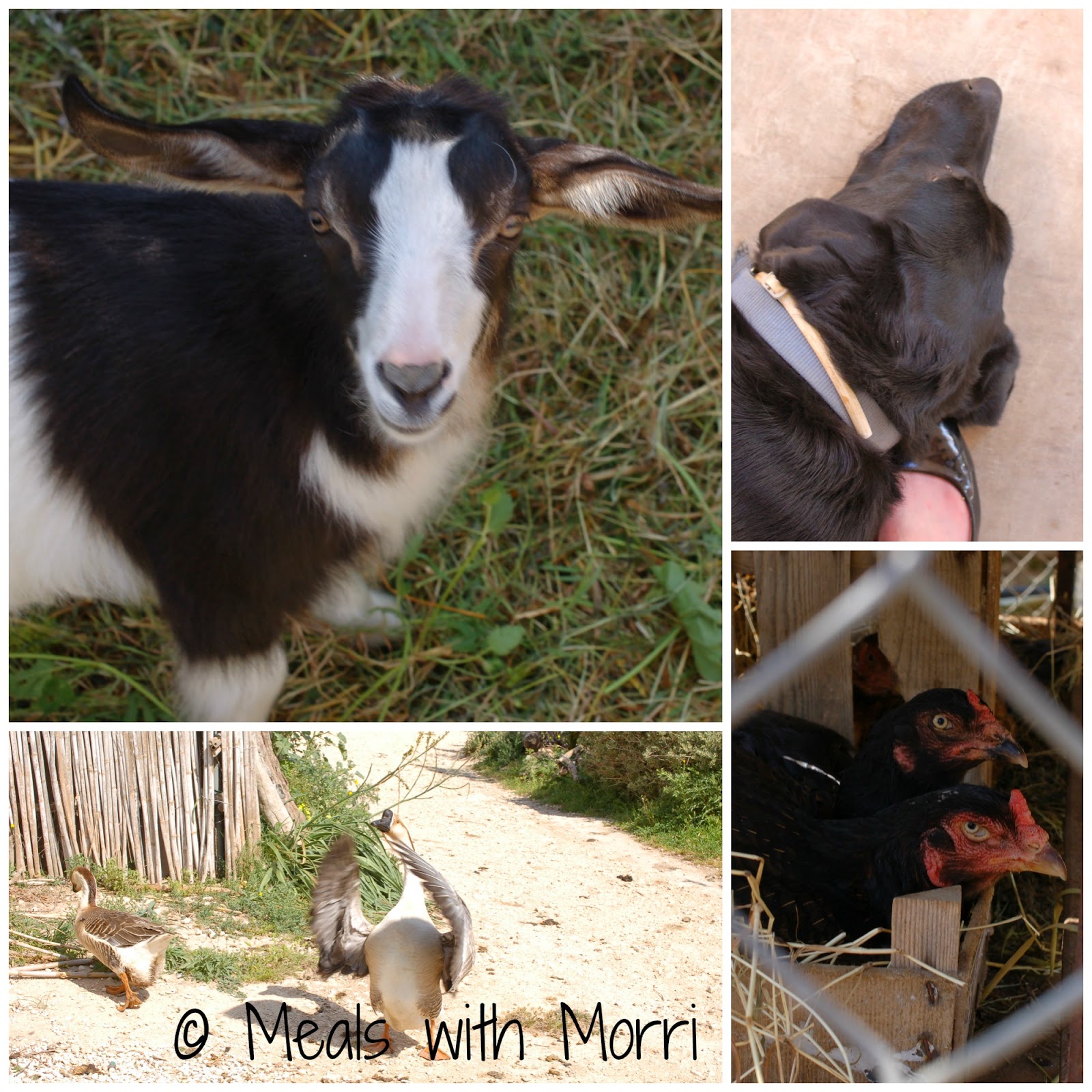
After lunch I decided to go to the petting zoo and take photos. I fell in love with the goats there, particularly the buck about the size of large dog. He loved to have his neck scratched and was willing to have his photo taken. The yin-yang kids were rather shy and kept themselves hidden, but the squat and very pregnant doe wagged her little tail and came when you called her.


We collected our pickings and headed back to the car with quite a bit of apples and various squashes in our arms and in our bags. The guys were partial to getting Jack-o’-lanterns, but I got a three teeny tiny ones and large white one that the nice ladies behind the counter said was good eats. On the ride back we stopped at Hunter’s Head Tavern in Upperville for a driving break. Sadly there were no gluten free beers to try, but it was interesting to sit at the bar with a glass of water and talk with the Czech bartender about the wonders of life.


My Saturday adventure ended with the boyfriend’s latest attempt to teach me how to drive his manual car (I only stalled a few times). I came home with a new-found love with Virginia's countryside, and can honestly say that Hollin Farms is truly worth the trip.