If you were to make the decision to go organic or support your local farmer, which would you choose? In many ways, while the organic movement has helped to create that conversation of how important it is to know where your food comes from and how it was grown/processed/made, the ‘label’ itself is worth noting.

“Permaculture is a holistic design philosophy and the art and science of creating community eco-systems in which plants, animals, human beings, and all forms of ecological diversity interact to produce a prolific, ecologically-sound, and regenerative system that can support itself and life indefinitely.”

On Tuesday I went to Bahrija Oasis, a permaculture center that has been practicing what it preaches for over a decade. My NGO brought along with us partners for a climate change and agriculture project currently in the works to better understand what an eco-friendly, local permaculture movement looked like in Malta. We spent half the day there learning about the following:
- Permaculture and permaculture principles
- Ecological gardening
- Eco-restoration & biodiversity
- Rainwater management
- Forest gardening
- Composting & compost toilets
- Holistic approaches to land use
- Ethical development
It was most certainly an inspiration, especially since my talk of gardens and homesteading causes CK to say, “I’m going to be living on a farm, aren’t I?” Everything that I have been reading about and aspiring to create a career around was what Bahrija Oasis embodied. The people responsible for the farms success combined traditional Maltese farming methods with the principles mentioned. I remember being in awe at how sustainable their practices were. They utilized old materials such as bathtubs, sinks, barrels, plastic bins, and tires. They used solar panels and a windmill for part of their energy use, and they even had a pond for aquaponics!

As we were walking, I asked our guide if he was organically certified, and remembered the look on his face was a struggle of being diplomatic yet critical of the label.
In truth, the organic label as I’ve come to see it in the United States is something that has so many loopholes you might as well be playing billiards; and it seems that parts of Europe is similar. While the definition of organic, in my opinion, should universally mean “(of food or farming methods) produced or involving production without the use of chemical fertilizers, pesticides, or other artificial chemicals”, it has come to mean something else. It has come to mean money for big business. Our guide mentioned that being certified organic seemed to only benefit big farms and industries, and even then the companies could get the certification with only a fraction of their product being organic.

Take Coca Cola for example. It has an organic label. So does Kellogg’s. And they say so in very small print of its origination under the organic logo. Suddenly, organic hasn’t come to mean the definition written above, but something that has become money-oriented and big business-friendly. The label has lost its meaning in the name of profit.
 |
| Source |
The USDA has changed the playing field for organic certification. Farmers/Businesses who strive for the organic elite title can still use pesticides, fertilizers, and fairly nasty chemicals on their crop. Products can be called organic even when only a portion of the ingredients going to making the product is actually organic. And what’s worse is how much of a strain it is on local farmers. More often than not the signs at farmers markets will say: “Not certified organic, BUT free of pesticides and chemicals, pasture-raised, etc.” In other words, “We’re organic, but the certification process is bogus and we want to continue doing what we believe in.”
But that’s what the local movement is all about: knowing your farmer, knowing your food, and knowing the process. After reading No Impact Man, I learned that a good way to go about this movement was to create a relationship with the local movement, treating it like a blind date. Arrange a visit to the farms and take a tour. Learn their process and ask them about their practices. It’s a form of empowerment, making the decision to choose farmers based on what you believe in.
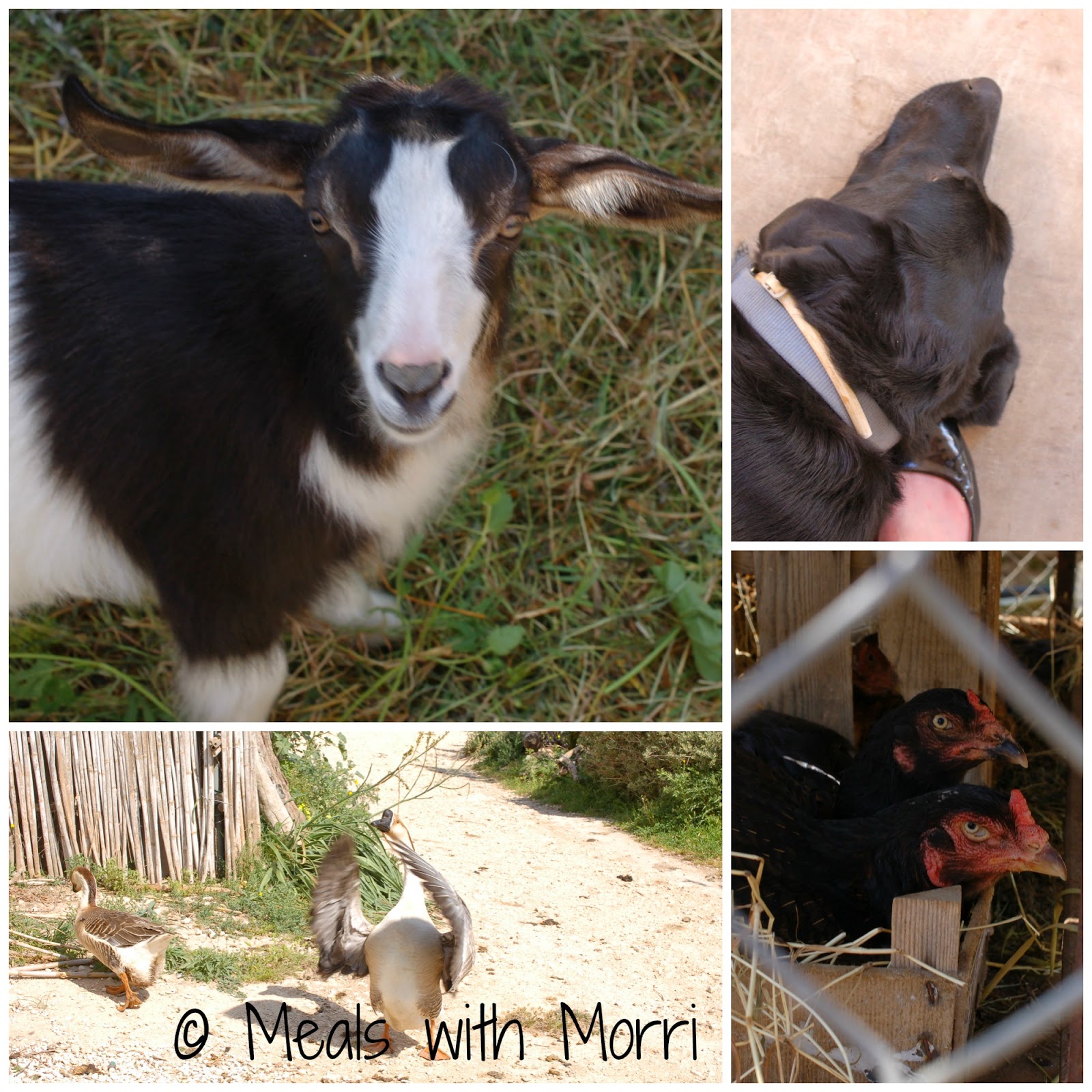
Bahrija Oasis may not be organically certified, but their methods are what I call organic. They apply the permaculture cycle with care, starting with the soil and ending with the soil. It is symbiotic, taking care of the earth and in turn being able to provide nourishment for yourself and others. While the farm itself is vegetarian, the use of animals is prominent: chickens and other fowl for eggs and bug control; goats for milk, weed management, and fertilizer; worms for nutrient-concentrated soil; and a dog for being a great companion and protector. Compost is a big deal here, as well as the usage of nettle tea as a fertilizer and natural pesticide.

So when our guide asked a fairly important question to us, “Which is more important, the organic label or supporting local movements?”, I knew where I stood. And the food (gluten free AND vegetarian) served at lunch was absolutely divine (much of it coming from the gardens). It was the first time I ever had wild thyme (also from the farm) tea, and I enjoyed it immensely.