Showing posts with label balance. Show all posts

Wednesday, March 13, 2013

Keeping it Simple

The year 2013 has had a rocky start. We’ve survived the 2012 “End of the World”, not to mention healing from natural disasters, human tragedies, and individual paradigm shifts. Everyone seems to have removed themselves from their normal routines, lives spinning sporadically away from old patterns. 


The GFRR has been around since the start of 2011. The movement brought together a group of innovative bloggers to show how working with the ratio of a recipe makes being gluten-free a whole lot easier. Every first Wednesday of the month I was inspired by the recipes they came up with: the flours they used, additional ingredients and flavors they incorporated, and the stories they told with their recipes. The participants are found all over the world, and their posts are viewed all over the world. For the first time, I felt camaraderie and acceptance in my trials for a healthier life, and I learned so much from the bloggers who have been part of the healthy eating movement years before Meals with Morri was created.


But life happens and people happily or grudgingly move on wherever life takes them. Be it school, work, children, a crisis, or all of the above, many people within the GFRR have been dealing with a lot lately. Less and less of us have been able to post our recipes, simply because other things have taken priority. I know, because school and my health have been of utmost importance to me since graduate school started. Meals with Morri is still a passion of mine, but at the moment it sits on the back burner, simmering and waiting for its time to shine.

I admit that I don’t post as much as I like, because I’ve started monitoring the relevance of my posting. I’d really like to talk more about health (not just concerning the thyroid), how rock climbing is bringing positive change to my outlooks on life, on food security/justice and how it drives my ultimate goal in becoming a conflict resolution practitioner, and traveling around to show the world the newest innovations of sustainable development and environmental change. It has nothing to do with the gluten free movement as such, but it has everything to do with a healthier outlook for the world and healing.

There are days I’ll look back at old posts and shake my head, asking myself “why in the world did I post this recipe?” The photos were crap. The concept of the recipe was complicated and overtly complex. I didn’t know much about healing, and changed on a dime to new possibilities of wellness. In short, the majority of my blogging has been one huge trial and error phenomenon. And I have loved every minute of it.

I’m not the only one, though. The food bloggers I’ve come to know on my adventures have lives to lead and are dealing with the exact same things I am. We’re transforming how we perceive wellness and our place in the movement, and it usually means being away from the computer to do other things and be with the people who matter most to us. We’ve started picking and choosing what to focus on right now, and what can be dropped or worked on later. Sadly, and although I completely understand and have done the same thing, it appears the GFRR has currently been put on hold.

People are simplifying their lives, blogging less or going another direction entirely in their blogging. And I’ve noticed that, since starting my new healing regimen, I want to simplify my life… starting with the recipes I post.


February’s challenge was all about waffles, and I was the host. I had a late start to getting the challenge out there, but in the end, my recipe and the other participant (Heather of Discovering the Extraordinary) have two recipes for your enjoyment.

Whenever the GFRR rolled around, I thought how I could make my recipe stand out and be different, mostly before I even grasped the concept of the basic ratio. I desired to be creative and different, to use ingredients not commonly used. But I started to think about how some people may not have access to certain ingredients, or becoming overwhelmed with all the different components I used. I want Meals with Morri recipes to be more user-friendly, and I felt waffles would be the perfect place to start.

For one, I’ve noticed there are numerous ways to make a waffle. There are different recipes and waffle irons from all around the globe. In the U.S. the most prevalent waffle types are:

The American Waffle: recipes “vary significantly, but are often made from a batter leavened with baking powder and may be round, square, or rectangular in shape. They are usually served as a sweet breakfast food, topped with butter and maple syrup, bacon, and other fruit syrups, honey, or powdered sugar.” (source)

The Belgian Waffle: “a type of waffle popular in North America identified by its larger size, lighter batter and higher grid pattern which forms deep pockets and has larger squares than the standard American waffle… It is somewhat similar to the Brussels waffle, but Brussels waffles are hard and crispy on the outside. As opposed to a traditional North American waffle, the Belgian waffle traditionally uses yeast instead of baking powder, although contemporary Belgian waffles are often made with baking powder. In North America, they are often eaten as a breakfast food; toppings vary from whipped cream, confectioners sugar, soft fruit, chocolate spread, to syrup and butter or margarine. Alternatively, they are served with vanilla ice cream and fresh fruit (such as strawberries) as a dessert.” (source)

As a kid, I didn’t have waffles or pancakes on a regular basis. I just wasn’t a fan of some breaded thing drowning in syrup as this huge soggy mass of sweetness. So I ate what other kids did when they wanted waffles: the frozen, toastable kind.

The waffle iron wasn’t used often, mostly because I felt it wasn’t my iron of choice. It didn’t have a crunchy exterior to pocket the toppings in the little squares. It was simply a pancake in waffle form. But then I was gifted with a Belgian waffle iron; and with this new-found desire to keep things simple and uncomplicated, I haven’t looked back since.

Blueberry Waffles

96 g Buckwheat flour
84 g Quinoa flour
60 g Brown rice flour
420 ml Whole milk
14 g Unsweetened applesauce
2 Large eggs, separated
60 ml Melted butter (unsalted)
1/2 tsp. Baking soda
1/2 tsp. Unrefined apple cider vinegar
1/8 tsp. Sea salt
300 g Fresh blueberries*

In a large mixing bowl, combine the flours, milk, and applesauce to sit on the counter overnight.
Preheat the waffle iron according to the manufacturer’s instructions.
Add the egg yolks, leavening agents, sea salt, and blueberries to the batter and set aside.
Either with a hand mixer or by hand, beat the egg whites until soft peaks form and fold them into the batter.
When the waffle iron is hot pour enough batter for one waffle (roughly 1 U.S. cup for mine) evenly over the grid, easing it toward, but not into, the corners and edges with a wooden spoon or silicone spatula.
Close the waffle iron and cook until it opens easily (or as the manufacturer’s instructions suggests), which is usually about four minutes or until the waffles are a golden brown color.
Keep warm (a preheated oven on 200°F will do nicely) while you repeat with the remaining batter, greasing the iron as needed.
When all the waffles are cooked, serve warm.

Makes 6 waffles.

*Fresh blueberries in a Belgian waffle iron may not be the best idea (it tended to stick), so I'd recommend using dried fruit if desired. They were still delicious, though...

Tuesday, February 12, 2013

Taking Charge of Anxiety and Stress

I admit that, when I last wrote, I was still knee deep in fight-or-flight mode. My sentences were run-ons and manically distributed. The words I used were emotionally driven and hectic. My stories were jumbled together and I had just started the process of coming down to Earth from a lifetime of stress and anxiety. A chill pill would have worked wonders during those two weeks of uncertainty, followed by a hot cup of herbal tea and warm milk.

(source)

Whenever I talk about taking medication - in this case I mean the antibiotic and the antispasmodic - I worry about perceiving myself as a hypocrite. After all, I often write how I am all for using natural means for healing. Be it with the food/supplements I eat, the thoughts I think, and the actions I do, I exhaust every option I can think of before even considering the idea of taking a pharmaceutical drug. Getting an artificially dyed pill from a doctor in a lab coat is a last resort thing for me. And I was definitely in the “last resort” category not too long ago.

So I took the medicine and I am gradually healing from the inside out. I am feeling better than I have in years, and I celebrate the changes: I can discern hunger, and I’m not as hungry as I once was; my activity level has skyrocketed while my fatigue has decreased; my mood is level and I’m not overexerting the good mood image (I am simply in a good mood); my skin is clearing up and my organs are starting to function properly; I'm sleeping (a big factor in all this); and I do not feel rushed or overwhelmed.

“The truth is somewhere in the middle.”  When I said this, I originally meant this as a way to balance the various practices and professionals I’ve gone to for healing purposes. This statement is also true for the concept of healing in general, and this post is dedicated to how I'm working on making this happen.

Along with the prescribed medicine I’ll be taking temporarily, I wanted to find ways of healing that I would feel empowered doing in the long run. I considered the gastroenterologist’s diagnosis of ASD, and how once upon a time another gastroenterologist tried curing my supposed “depression” with an antidepressant. I didn’t want to take a pill that altered my brain chemistry and played ping-pong with my emotions. I wanted to learn how to bring myself back to a peaceful baseline and essentially change how I handled stress in a positive and loving way.

(Note: What I’m about to share is in no way a formal treatment to ASD, IBS, or any other health concerns you may have. These statements are personal opinions and things I’ve tried that are working for me. Please consider this as you read on.)

I had received wonderful suggestions when I’d asked for advice last time. Emails, social media comments, and words face-to-face offered support and food essentials for tummy troubles and antibiotics. Oddly enough, no one really touched on the ASD aspect, and I think I know why.

We are part of a global paradigm where stress means productivity. At least in my interpretation of Western culture, we have to be “on” all the time to feel like we’re doing something meaningful with our lives. In many cases, and this resonates with me also, we have been in “fight or flight” mode for so long we don’t even remember what being at peace is. We become bored with inaction, and worried that we are stagnating progression. We lose our self-awareness with constant pressure from our inner dialogue, perceived expectations, over-stimulation, and over-scheduling.

Stress and anxiety are normalized internally. When we experience the adrenaline rush and adrenal fatigue over a significant period of time, our body gets used to the highs and lows of both, and our baseline adapts to being at the height of Mount Everest rather than sea level. A bit extreme, I know, but I want you to understand how crucial it is to nip chronic stress and anxiety in the bud and how small changes can leave a big impact on your health.

The first steps I started working with were self-awareness and acceptance. I asked myself questions like: How are you feeling? What are you feeling and what caused that feeling to occur? Is your mind racing and heart pounding when you’re trying to sleep/meditate/calm down? What external factors are affecting you internally, for good or ill? Acceptance is a hard thing indeed, for we are our toughest critics. Thoughts like “What do I have to be stressed about?” and “Come on, Dummy, this isn't hard!  Why can’t I do this?” can plague the chronically stressed and anxious. When we are in this state, it is extremely hard to see the big picture because we are so hyper-focused on the mini crises all the time.   

I learned that by being in a constant state of distress, I was hungry all the time. When I was stressed and anxious, I snacked on nut butters, rice crackers, and smoothies. Add that to my tummy troubles and my habit of not getting enough sleep, I was too fatigued and in too much pain to be active in my daily life. I used the medication prescribed to me as a tool to remove my body woes from the equation to turn my focus then on what was going on upstairs behind my pretty face.

The second step for me was analyzing the life I live with love and compassion. What are the things most important to me? What can I place on a shelf to work on later? What do I keep? What do I let go or change? These questions led me to the journey of finding an inner calm and adjusting the structures of my life to suit me.

There are certain ways to calm yourself, and you do not have to do it alone or by your own design to get positive results. To increase my own ability at achieving a steady baseline, I looked to meditation. I was advised to do fifteen minutes a day, but my mind tends to wander and think of all the things I need to/have to/should be doing. So I became even more frustrated when I was unable to return to mindfulness and stressed by those precious minutes wasted on trying.

The answer for me was guided meditation, and there are many sources out there varying in length, type, and technique.

“But I don’t have time to meditate and sit still”, you say. “I have all these obligations to do…”

Stop. right. there. When you are in this mindset, of course you won’t have time. And my answer to that can be shown in this image:

(source)

As I said, guided meditation is helpful for me because I can focus on a voice and the instructions I am being given. For 10 – 20 minutes (or more), all that matters is my breathing, resetting my brain, and reveling in the possibility in how it will affect my day for the better. I find doing it in it the morning (though not necessarily right when I wake up) and/or before bed good times for me, but choose times that work for your schedule.

(source)

This leads to another crucial aspect in lowering stress and anxiety for me: routine. Now, I’m not talking about being a “slave to routine” as the comic above implies. I’m talking about having something your body can work with, a way to regulate and manage yourself and what matters most to you. Since graduation (and quite possibly before that), I was flying from one thing to the next – blind and awkward in between – doing everything I could to stay upright. Instead of planning by the hour for everything I do (as I tried to and bombed at), I’ve laid out my weekdays in morning, afternoon, and evening time-slots. I have days where I am climbing or doing other forms of exercise and completing a certain chore/task for the house. I have definitive times when I’m working or at school. I have days dedicated to studying, and an evening or two dedicated to whatever it is I may treat myself to. From doing it this way, I found that I not only have more time than I thought; I also have focus and energy without becoming overwhelmed. Work and play are becoming wonderfully balanced.

The final reflection I’d like to share is to not sacrifice taking care of yourself in order to “get things done”. I admit there are still days in the week I perceive I have a lot to do and the consequence is getting less sleep/relaxation than I’d like. For example: On Tuesdays my class gets out at 10:00 p.m., and then I am up at 5:00 Wednesday morning to climb. I know that I’ll get less than seven hours of sleep in between, so it’s just a matter of adjusting certain variables to ensure I’m doing all I can to not return to that unhealthy cycle. Be honest with yourself and others when everything in your being is telling you to chill out. And when stress and panic arises, don’t beat yourself up about it; instead, take pride knowing you realized what’s going on and take as long as you need to bring yourself out of survival mode. 

Thursday, February 7, 2013

The Truth is Somewhere in the Middle

Warning: may contain less than pleasant descriptions of bodily functions and words of ranting, needing advice, and strong-ish language.

Ever have those moments where you perceive that everything is happening at once and time is moving faster than you can handle and run-on sentences suddenly make sense and your body is exhausted and your mind keeps going and then… BAM! You hit a wall.

Yeah, I absolutely “adore” those moments too.

As mentioned in my last post (an astonishing two weeks ago), I’ve had tummy troubles. This term is an understatement, but I try to keep the content of this blog as family friendly as possible. I was so terrified of my symptoms and the pain that I scheduled two ASAP appointments with a gastroenterologist and an urologist. Add the fear of the unknown with emotional/hormonal upset in the form of body image obsession… My two weeks MIA from MWM have not been all rainbows and free hugs. But goodness, I wish it had been.

For a week it seemed like I was balancing a number of plates in the air with spectators looking on, ready for a good laugh. I wanted to do so much, be so much, in a short time frame. And instead, when everything was expected to crash down, porcelain shards littering the floor, some spectators were kind enough to join the act in assisting. Some plates were added and others removed, but little by little I could balance the aspects of my life. And while I was overwhelmed by it all, it isn’t as bad as it was.

If I could list all the plates I have been balancing based on their importance and priority and my focus of them, it would be thus: Health (includes all aspects), Grad school, Future, Miscellaneous obligations, Work, Family and Friends, Meals with Morri, and so on. The overall feeling of crappiness health-wise bled onto the other plates, and I was so exhausted and so stressed out and internally so toxic it started to physically manifest in the form of bloating and red bumps around my eyes, hands, and elbows.

I waited and waited and waited until I couldn’t take it anymore. The pain was terrible, the Google searches foretold impending doom, and the inner dialogue was scattered and anxious. Doctors’ offices were called and appointments were made. And if there is one moral in this story, people, it is the following:

“The truth is somewhere in the middle.”

The gastroenterologist I met with is an esteemed practitioner in his field of practice. Mama Dazz even visited him back when she was in her early twenties and recommended his expertise. With appointments like this I tend to be nervous. I lose all sorts of control and power when presented to doctors in general, so it was nice to have her come with me. I walk into his office and the usual questions are asked: Why are you seeing me today? How long have you experienced these symptoms? What have you done thus far in regards to treatment, management, etc.? What additional medications are you taking? What does your diet look like…?

The last two questions resulted in him essentially going into a tirade about how as far as he could see, a healthy young woman did not need hypothyroid medication and most certainly should not be on a gluten/soy/refined sugar free diet. From this conversation I was shaken to the core. This person did not know my history and had only one doctor-patient meeting to go on. He did not know how much better I felt eating the foods I ate, or how the Armour Thyroid did indeed affect my life positively. I felt so small leaving his office. I began to cry when the discussion turned to possibly having to incorporate gluten and soy based foods in my diet for tangible analysis in future blood work, to stop taking my hypothyroid medicine, and to think about a colonoscopy in the next couple of weeks (his recommendation, but not something I plan on doing right now).

Upon reflection, I realized I was given a broader image of what ethics and values the health industry contained. The majority of my health providers (such as Hurlock and Harris) are holistically based. They tend to focus on the intangible evidence and have a more qualitative outlook on healing. The gastroenterologist, however, as I perceived him is a man of numbers and facts, needing tangible evidence to satisfy his quantitative logic. My other grievance was, along with his strong opinions about my life, he didn’t really provide me with any answers, only diagnosing me with terms I’ve had been labeled with all my life. He mentioned ASD (anxiety stress disorder) and IBS, but I knew that already. What I didn't know was how I could fix a lifetime of adrenal fatigue and self-imposed stress and how my symptoms tied into it.

The urologist, another esteemed practitioner (who reminded me of the stereotypical grandfather image giving advice while on a fishing trip) was a little softer in his quantitative logic and needs for tangible evidence. Instead he listened and pondered and asked questions when appropriate. His practice was in no way what I’d consider an alternative practice, by his demeanor was. I felt no judgment as we talked about possible reasons as to why the UTI and other symptoms were happening now, and if his options matched my values and ethics. I was reserved at the thought of being on low dose antibiotics and very powerful antispasmodics for the next three months, but I do feel the difference after a week of treatment. 

The truth is somewhere in the middle, and for me that means joining the two logics and needs for evidence to see the bigger picture regarding my health. I can’t help the world sick. It’s as simple as that.

I end this long and non-recipe based post with a request. I am currently looking into other ways of stress management and anxiety diminishers. If anyone has had any experience similar to what I’ve gone through, from mindfulness exercises to probiotic recipes to balancing the antibiotic’s side effects, I’d love to hear from you.

Monday, December 31, 2012

Reminiscing the Old and Planning the New

I am a planner. I like to plan things out, lay it out in manageable stages of logic of where I’ve started and how it will end. Starting things and ending things have always been a relatively easy task for me. The middle part on the other hand… not so much.

December passed by in a blur of anxiety, accomplishment, illness, sorrow, and people. There was a week following my final papers that consisted of a 101°F fever, coughing and sneezing and fairly vulnerable. All the plans I had for December, all those recipes, climbing problems, and yoga practices, didn’t happen. And for once, my plans to have everything done on time, precise and accurate, were tossed to the wind to make way of a much-needed break from it all. I slept. I wept. I ate. I loved.

I feel so grateful for this “shift or be shifted” year, with months of “aha” moments and triumphs and changes:
January was all about trying new ways to be physically active and making the perfect cornbread recipe.


February was a month of adventure, learning about various eating lifestyles, and the start to taking photography seriously as an art form/science.

 
March was the month of honoring my progression and loving myself, regardless of the bumps along the way.


April celebrated my one-year blogversary with what I learned and what I planned to learn before April 2013 rolled around.


May was the start of understanding how diet and exercise helped in healing a hypothyroid condition. Oh, and let’s not forget Graduation, which inspired me to continue my academic career in the graduate program in the School for Conflict Analysis and Resolution.


June was an honest month, and finally realizing how important taking care of myself really is.


July was the start of experimenting with pareve bento box snapshots, heartbreak on multiple levels, becoming adamant in weekend farmers markets, and supporting local food sources with a social justice twist.


August brought with it a movement of fermentation and homemade nut butters, personal growth and graduate school classes.


September gave me my first product review and coming face-to-face with hidden depths of life's grievances and growing pains.


October brought series of hard lessons, new priorities, a deeper relationship to family that will always be there no matter what, and loving all things simple.

 
November was my month of experimenting with Primal Blueprint eating, playing with gluten free beer, and twenty-three things I learned by my twenty-third birthday.

 
And December finished the year on a sweeter note than I could have ever hoped for.


With the last day before the New Year, I thought to share a recipe I was quite proud of. Even with many of December’s plans (there’s that word again) left undone, I have had plenty of time to get ready with January’s plans, more so intentions than they are resolutions. 

Happy New Year, everyone. Have fun and be safe!


Winter Gingerbread Cut-out Cookies (inspired by this recipe)

150 g Garbanzo bean flour
75 g Flaxseed meal
75 g Coconut flour
50 g Mesquite powder
1 tsp. Baking soda
2 tsp. Ground ginger
1 tsp. Cinnamon
1 tsp. Raw cacao powder (regular cocoa powder is fine)
1/4 tsp. Sea salt
1/4 tsp. Cracked pepper
125 g Unsalted butter, chilled and cut into small cubes
175 g Honey
1 Large egg

Measure out the flours, baking soda, and spices and pour into the bowl of the food processor to mix (a few pulses should do for mixing just fine).
Add the butter and blend until the mix looks like breadcrumbs, and then add the honey and egg until a sticky ball of dough forms.
Remove the dough from the food processor and mold into a thick disk to wrap in with parchment paper or saran wrap.
Place it in the fridge for 15 minutes to set.
Preheat the oven to 350°F, and line two baking trays with parchment paper.
Roll the dough out to a 1/4-inch thickness on a lightly floured surface (I used additional garbanzo bean flour).
Using your choice of cutters (I used my Ikea animal shapes, plus a few people, hearts, trees, and moons), cut out the shapes and place on the baking tray, leaving a gap between them.
Bake for 12-15 minutes (my oven’s baking time was between 13 and 14 minutes), or until lightly golden-brown.
Leave on the tray for 10 minutes and then move to a wire rack to finish cooling.
Continue cutting out the dough and baking until all of it has been used.*
When cooled decorate with the writing icing and cake decorations of your choice, but they are delicious as is and perfect for dunking into hot drinks.

Makes (roughly) three dozen cookies.

*Be sure the baking trays have cooled down completely before adding another batch!

Thursday, November 22, 2012

Not Quite the Caveman

My experiment with going Primal for "Good Nutrition Month" ended after three weeks. I couldn’t tell you when exactly it went awry, but I could tell you something was wrong before my birthday, and probably as early as a week into the dietary lifestyle change. All I know is I am honoring "Good Nutrition Month" by switching back to my old routine, though I still feel a little guilty not keeping it up for another week. 


When I said going Primal isn’t as difficult as you think it is, I truly meant it. For one, three weeks of no legumes, grains, no coffee, and limited fruit/sweetener intake was a challenge and an interesting way of evaluating my past and present dietary lifestyle. I was disappointed that my body reacted the way it did, as I was so excited to be part of the modern caveman experience, to positively figure out what my body needed in order to do what I wanted. I gawked at many of the people who ate this lifestyle, the majority who were “strictly” Paleo/Primal while others used a creative license (but nonetheless have a less-processed ethical-omnivore way of looking at food), and I was inspired to do the same. They were the epitome of "healthy" in my eyes, absolutely and marvelously in shape and beautiful in every way possible.


So I took out legumes and grains and incorporated raw and cultured dairy products. I went through the first week craving fruits and eating a ton of almond butter, followed by my appetite beginning to finally subside and mellow. The removal of coffee and the addition of progesterone to my hormonal therapy followed. Throughout October and part of November did I realize I was back to using food and exercise as a means of controlling my body to balance the uncontrollable situations coming at me in waves. With that came terrible IBS upset, intense intestinal distress, and shifting from one emotion to another in a matter of seconds.


I do not believe going Primal caused this imbalance; rather, I think doing too many good things at once finally caught up with me and turned sour. I do believe going from legume lover and grain glutton to “Me, Caveman. Four-leg, Dinner” overnight is not particularly smart for someone whose body stresses with immediate change. I do believe this experiment was worth it, and encourage people to try new ways of eating (safely and for the right reasons). And above all else, I do believe in honoring what my body tells me. When it says "enough", I listen. 


I loved making Primal meals, and I look forward to making them again. Perhaps two of the three main meals and all snacks throughout the day will have Primal tendencies. Perhaps four days out of the week will hold true to Mark’s Daily Apple “Primal Blueprint” movement while I enjoy huevos rancheros, overnight oats, socca, and legumes on the other three. I give what my body needs, and for the moment it needs gluten free grains and peanut butter. 


Wednesday, November 23, 2011

November Reflections: Grain-Free and almost Stress-Free

I had so many blog posts I wanted to do, explicitly focused on my birthday, my talk with Cheryl, my grain-free week, and a few recipes as well. But life had different plans for me, and for the first time I am totally okay with it.

Ostkaka: my birthday "cake"

My birthday week was quiet. So quiet, in fact, that it went by in a blur of rain, school, and work. Both my Anthropology teachers canceled their classes on my birthday (divine intervention, perhaps) to attend conferences in Montreal and New Orleans, so I spent my day doing absolutely nothing. And as I mentioned before, I’ve been trying out the grain-free, one fruit a day (not including the lemon water I use for drinking down FiveLac), and no additional sweeteners, I didn’t have a cake specially made for the occasion. I did, however, have a piece of ostkaka I made on the 14th to celebrate Sweden’s “Day of Ostkaka,” a food holiday established in 2004. Oddly enough, it was the same “cake” I had in Sweden for my birthday last year.

I miss those times. I really, really do. My last semester of school had left me a stressed, anti-social mess, with a sore throat and a dry cough that finally went away after two (plus) weeks. I would have loved to go out on my birthday with the people I’ve been neglecting, but I was just so tired that all I wanted to do is sleep. I thought it was the whole grain-free thing, but really I was underestimating just how compromised my immune system was with the getting glutened-flu double whammy hullabaloo.

For a while I was still getting headaches, though the FiveLac keeps me from being hungry an hour after eating a full meal. I can wait until after six to eat dinner instead of having to eat right at five. My digestion is doing awesomely, and I think my hormone imbalance is leveling itself. I thought I had to increase my Armour Thyroid to 90-30-90 due to the emergence of previous symptoms (i.e., lower body temperature, cold hands and feet, yellowish palms and fingertips), but after acknowledging the headaches being stress related (and also for thinking too much) they’ve miraculously gone away.

Grain-Free "Granola" Bowl

As far as drastically changing my diet for the long term, Cheryl recommends I get tested for Candida until I officially go down the ACD or SCD route. For now I like being grain-free, white carb-free, and eating one fruit serving a day (most days). I’m noticing that I’m not as hungry, I’m fuller longer, and for the first time this Sunday I was actually hungry.

Interesting, isn’t it? Instead of eating when I was hungry I was eating because I was programmed to eat at a specific time. There is a difference to a hungry stomach and a stomach experiencing discomfort. For as long as I’ve been blogging, I ate to feed the headaches and I ate after eating to feed the “hunger” pains. After this weekend, filled with a family meditation seminar, the headaches went away and I slept. I mean, I actually slept in a way I thought was lost to me. Before the meditation I thought I had been too grounded to let go of all the stress. I am feeling more in my body than I have for two years. My hands are finally warm, and school (and graduation) isn’t so scary anymore.

With two weeks of school left after Thanksgiving weekend, I am definitely looking into doing Kundalini yoga again. Being grounded is at the heart of being healthy. And if I’m going to change the world and nourish the people in it, I have to live by example and nourish myself. Since I've returned to running and working with the munchkins at the community center, I need to be eating more than I have been if I don't want any more zombie nightmares. It's day four of warm hands, so I must be doing something right.

Monday, October 24, 2011

Becoming a Gluten Free Athlete with Socca Tuna Melt

Motivation comes in many forms. Some use the “I’m doing this so I don’t have to do it for the rest of my life” approach. Others use the “I’m doing this to make other people happy” approach. But I prefer the “I’m doing this for me” approach. I’m writing this blog for me, and hopefully to help others along the way.


I lost substantial weight my first semester in college. It was to prove to myself (and my ex-boyfriend at the time) that I was worth something, to feel better about myself, and to take my mind off the many changes coming my way. I went from weighing 140 lbs to about 118 lbs in a matter of a semester, a size 8 in pants to almost a size 0, and still I wasn’t happy. I think this is where my obsession with exercising and “healthy” eating truly began, and it’s taken the better part of four years of healing and patience and support to get where I am today.

My disordered eating wasn’t about food. It was about control. What I did or didn’t put into my mouth or how long and how often I exercised were the ways to make me feel like I ran my life. Change was always around the corner, but my body was for me to control and no one else could take that away from me. That was my logic, but really, what good came from it? If I felt it wasn’t okay for anyone else to go to bed hungry because they had no other choice, how was it okay for me to go to bed hungry when there was always a well-stocked kitchen downstairs? What was the point of eating healthy and working out every other day when it was never enough? Not only that, but when you limit your caloric intake and exercise, it’s not only illogical… it’s freaking dangerous.

I’m telling you this because of what happened this morning. IB and I went on a slow run this morning, less than half an hour and under two miles. When we finally came back, my face was a deep red; I was nauseous and had tunnel vision even after gulping down water. We decided it was best if I lay down, though after a few moments I started to shake convulsively. It went away, but he was still concerned. He’d been a runner for years and never experienced this before, so he started researching.

I’ve been working with Cheryl Harris for nutrition guidance and life enrichment since February this year. I can look back and happily say there is progress. I’m eating between 1500 and <1800 calories a day instead of having a panic attack if I eat more than 1200 (and yes, this included the days I exercised). I’m giving my body what it wants immediately when it asks for it. There are days when I’m still hungry after I’ve eaten dinner, typically when I have a late class and pack food for myself, and I no longer grudgingly feed myself until I’m no longer hungry.

I learned a new mantra, one that I can tell myself should insecurity rear its ugly head. “Food is the fuel that keeps me going, and not the anchor that weighs me down.” How's that for deep?

I'm NOT holding myself down anymore.

Maybe I felt that, since I wasn’t what I pictured to be an “Athlete,” I could eat normally and still work out like a gladiator. That is, one hour of aerobic exercise, about half an hour of weights and other gym machines, and I’m not even counting all the walking I do on campus. If I want to go to the gym three to five times a week, I need to make sure my body has the fuel to do it. That means sleeping a full eight hours a night, drinking water, getting the right vitamins, and yes, eating. Perhaps a year ago if the Burt-man asked me “Do you want to be strong and solid (implying the possibility of weight gain) or a ninety-eight-pound weakling?”, I would have had to think about it. If I was honest with myself, I would have likely preferred the latter because I felt I’d rather be thin (implying beauty) than muscled and "stocky". But I know better now.

Beauty is found in a happy self, a body that gets what it needs and never wants. I still have a long way to go, but I’m not the person I was four years ago trying to be something that others would like. The next time I speak to Cheryl, I will focus on the Gluten Free Athlete perspective, and what measures I need to take in order to embody this persona safely, effectively, and happily. Michelle and Lori of Pure2Raw seem to have this concept down to a science.

Oh! And I’ve discovered a new blog, The Gluten Free Athlete. Something tells me I’m going to be visiting it often. But for now, I have a socca recipe for you, one that I gobbled up gleefully post-run. High in healthy fats and carbohydrates, my body felt like new.


Socca Tuna Melt

1 Socca Recipe
1 slice Gouda cheese, quartered
1/4 c. Canned tuna in olive oil, drained of excess oil
1 heaping tbsp. Fresh salsa 
1/2 tsp. Dijon mustard

Prepare and cook the socca (like so) and place it under the broiler.
Thoroughly blend together the tuna, fresh salsa, and mustard.
Remove the socca from the oven, flip over, and lay out the cheese on one side.
Top the cheese with the tuna mixture and fold the other side on top (like you would an omelet).
Place it under the broiler once more until the cheese is melted.

Cut it in half and serve with sour cream, a small salad, and carrot juice.

Serves 1.

Tuesday, June 7, 2011

Aha! Moments & Recipes by the Book

I don’t know where my mind has been, but I have my theories. Rumor has it she has left the confines of my skull in pursuit of better things, such as running off with a Latin Love God, working at a local café, and making it as an actress in b-rated horror flicks. Without her, I’ve made rookie mistakes, mathematical mistakes concerning recipe calculations or forgetting to acknowledge where acknowledgement is due (Like Erin of The Sensitive Epicure for example, the lovely hostess of this month’s Gluten Free Rally for pâté a choux). I know my two wrongs don’t make a right, but I’ve fixed where I could without my mind in her proper place.


That’s the beauty of being alive, though. We don’t always have a “do over” button or a way of making our mistakes magically disappear like the backspace button on our keyboard when we misspell a word. We do, however, have the ability to correct our errors in the present, as well as the difficult choice in deciding whether to fix them or leave them be. Even if my mind has wandered off to goodness knows where, probably Scandinavia of all places, I turned the wrongs into rights.

But it doesn’t stop there.

It was well past midnight when I found myself unable to settle down. In the darkness I stared out into the dark terrain of my bedroom, filled to the brim with boxes. There were mountains of clean and dirty laundry, boxes of memories that weren’t even mine, even going so far as things yet to unpacked from my semester abroad in Sweden. Within a year, to which I am including my anticipated move to the house I’m renting with friends this August, I’ll have packed and unpacked my life nine times. You heard me right, people. Nine. Times. No wonder my mind ran off without me.

It was time to unpack. It was time to declutter. It was time to get my mind back.


There was a severe imbalance towards my path of Being. I pretty much had the health thing down. I was physically aware with what my body was telling me, at least where eating and exercising was concerned. I started to find things I enjoyed doing to keep my mind focused and busy. But still, something was missing. Something wasn’t right.

There was too much clutter physically manifesting itself in my space, that peaceful haven from the boisterous world that awaited me outside. Where there should have been feng shui, there was congestion, and it was affecting me on a spiritual and emotional level. Where there should have been stillness and quiet, there was chatter filled with incessant rambling concerning life paths I didn’t want to take. With all that clutter I had lost a sense of stability and Self that I felt only other people ultimately knew what was best for me.

 Funny. That all seems to change when you start to throw things away, when you finally unpack last year’s adventure. It turns out your mind was there the entire time, but its voice is significantly louder than it used to be, certainly louder than the fading prattle that used to torment you before.

On a completely different tangent, this could explain why I don’t do recipes by the book. I prefer to treat them like guidelines, friendly suggestions more than anything, and tend to add what I think it’s lacking or omit what I think it doesn’t need. Sure, I’ll keep to the same or similar preparations and I’ll give credit to the origins of the recipe, but cooking is an evolutionary process. What works for others may not work for me and vice versa, so adapting to your needs is not only essential but also a great way to experiment with an already delicious concept.


Except for modifying one thing (okay… maybe two, to make it gluten and refined sugar free), I made a recipe exactly as it was written, and I learned a lot from doing so. I learned that it’s okay to do a recipe differently where you see fit, and that doing something just as it was written or said or done may or may not work for you. I learned that having guidelines made by other people are nice to have when you are looking for perspective or a starting point, but not so much to live by right down to the letter.

You’ve made it this far, right? Go on. Give yourself some credit and listen to yourself for a change. You deserve it.


Wednesday, May 25, 2011

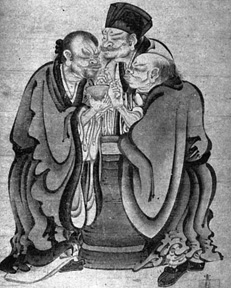
The Tao of Cooking & Silly Old Bears

To think, I had almost forgotten. I had almost forgotten how effortless life could be, how stress could be easily averted. There was a time that I would go out with friends and still have time for school, for work, for self reflection, and for family. These days it seemed like it took a lot of work to simply exist, to be with people and be alone.

The Vinegar Tasters (source)

This is my week of R & R, the week I slowly and surely move back into the groove of being back home with the folks. My grades were better than I expected, and ended up with a 3.23 GPA for the semester, with A’s for classes I thought I wouldn’t get A’s in and passed the classes I thought I was failing with fairly good marks. My summer internship with the Benjamin Franklin Summer Institute for South and Central Asia is underway, and Andy Shallal from Busboys and Poets got in contact with me to discuss working with him in the future (I was so honored that he remembered me). Overall, my health is improving, and with my body temperature finally at 98.6°F, I can happily say I’m no longer one of the Lizard People.

So, with all these wonderful things going on, why was I not at peace? Why was I not happy being still? Why was I not content with myself, overly self-critical and focusing on things I was not and things I couldn’t control?

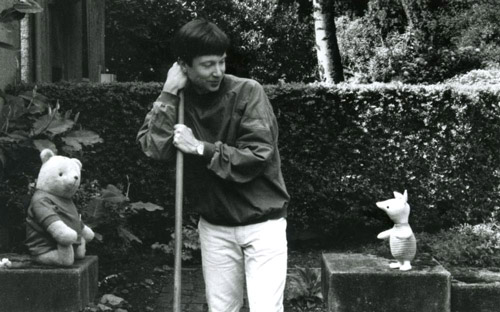
This is where a certain Silly Old Bear comes in… and Benjamin Hoff’s book The Tao of Pooh.

(source)

It occurred to me that there might be a reason to my frustrations of feeling I wasn’t doing enough. I felt dreadful that I hadn’t gone to the gym in almost two weeks, not counting the physical labor I had done with moving out of campus housing and back home last Wednesday. I felt useless and lazy by wanting to sleep and relax while there was clearly still work to be had. I looked in the mirror and saw what my “lack” of working out was doing to my body, becoming “soft” and “getting bigger” as I stared at my reflection.

This is what I had forgotten: as long as I had preconceived notions and expectations of what my life should be like, I would never be happy. I would never have time to enjoy the present while worrying about what I did or didn’t do, what I am and am not doing, and what I will and will not do. For the past year, maybe more, I was the “Bisy Backson” in which Benjamin Hoff dedicated an entire chapter in his book. I was desperately active, the Athletic sort of Backson, working when I worked, working when I exercised, and working when I played. No wonder this year left me a charred empty shell of what I used to be. No wonder life kept trying to subtly tell me to slow down time and time again, keeping me from doing things I planned with people. I didn’t have time for life, for the people and things that mattered most to me, simply because I was spending all my time and energy worrying about it. To quote this marvelous book, “Enjoyment of the process is the secret that erases the Great Reward and Saving Time.” I forgot the beauty of the journey and the process by hungrily focusing on the destination and the outcome.

Recently I’ve unknowingly incorporated the Taoist philosophy into cooking. I learned to let foods sit and be at rest, making batters in advance and leaving it overnight in order to mimic their gluteny cousins for the best effects. The same goes for other dishes (some naturally gluten free anyway), but it is more about flavor than it is about texture.

The magnificence of the process of cookery is how the outcome is considerably different than it is when you first combine the ingredients. Last night I was frustrated with the broth I made for a coconut curry vegetable soup to side with my oven-baked curry chicken. The green curry paste overpowered the other ingredients, and it was saltier than I wanted, so I added a little of this and a pinch of that, thinking I’d have to dump the whole thing when it still tasted off (I didn’t want to serve my parental units a less than delicious recipe). In my pessimistic state, I turned off the heat and left it on the stove. When Mama Dazz came home from work, the broth took on a new persona. It no longer tasted like bitter seawater with a kaffir lime leaf, coconut, and curry aftertaste. In fact, it had a balanced flavor of all the broth ingredients, including the vegetables I had put into it.

The Tao of cooking is pretty straightforward, once you understand it. There is a time when it is appropriate to fiddle with a recipe (i.e., the process), and there is a time when it is appropriate to leave it alone (i.e., letting it be on its own accord). Gluten free cooking, especially when baking, typically deals with the latter.

Benjamin Hoff with Pooh and Piglet (source)

As a recovering and sometimes relapsing Bisy Backson, I end this post with a thought-provoking excerpt:
“It’s not surprising, therefore, that the Backson thinks of progress in terms of fighting and overcoming… Of course, real progress involves growing and developing, which involves changing inside.” (B. Hoff)
This is what I’d forgotten. This is what I remembered. This is what I learned.