Showing posts with label patience. Show all posts

Saturday, September 20, 2014

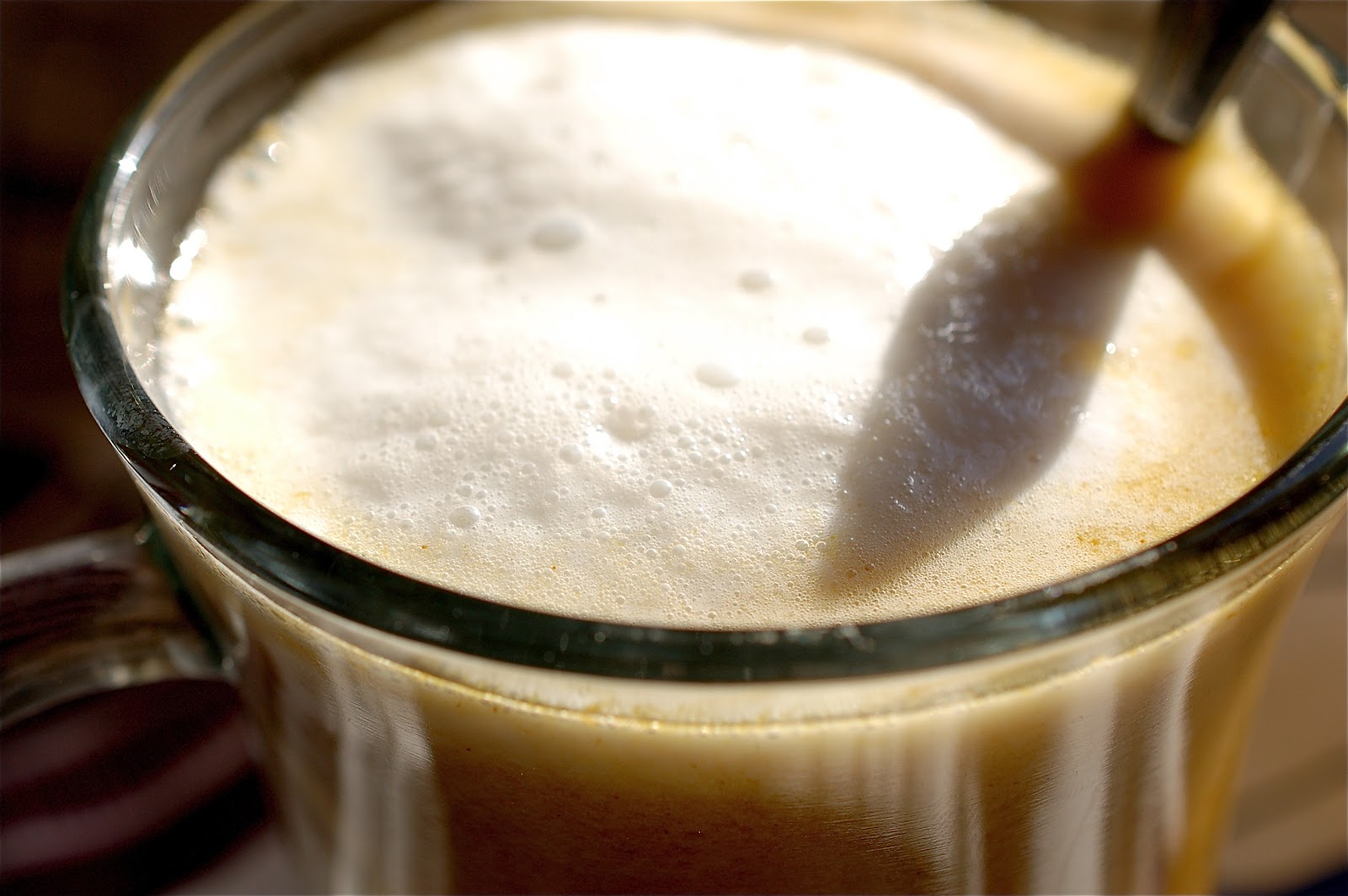
Creamy Split Pea Soup (Vegan)

When I came back to Malta from my vacation in Rome, my first week back was a rough one. Each visit makes the distance that much harder. Each visit provides another incentive toward closing the distance and finding a sustainable career within a quarter time-frame.

Working full-time and finishing graduate school the first half of my time in Malta was a difficult one. For the first time in my life I struggled to assimilate into the culture, or make friends outside of work. I essentially became a recluse, struggling with living on my own and by myself, being hit hard with various life experiences and triggers, exhausted and emotionally fatigued. 


But it seemed like I came back to a new Malta, and all it took was a vacation and a shift in priorities.

Since returning from break, I strived to take care of myself, and to honor myself in every sense of the word. I focused on honoring what my body needed, especially with meals.

Throughout my time publishing recipes, I’ve internally lamented how I’ve ignored soups and stews, especially blended soups. I always have the tendency to overthink or overdo simple meals, and since my continuing research and activism in sustainability, I'm working to simplify my palate in the sense that every flavor becomes complex and satisfying. 


Creamy Split Pea Soup (Vegan)

250 g Split green peas, soaked overnight in water with apple cider vinegar
1 Celery stalk, coarsely chopped
1 Med. Carrot, coarsely chopped
1 Yellow onion, coarsely chopped
1 Garlic clove, coarsely chopped
2 tbsp. Olive oil
Water, hot*
1/2 tsp. Sea salt
1/4 tsp. Black pepper
1 Bay leaf

Place the split green peas in a pot and top with water and apple cider vinegar to soak eight hours or overnight.
Drain the water and set the peas aside.
In a medium to large pressure cooker, set the heat to medium-high and drizzle with olive oil.
Sweat the vegetables until translucent, and then add the peas, seasonings, and the 2 tbsp. of olive oil.
Pour the hot water into the pot until it is just covering.
Place the pressure cooker lid as instructed for your model, lower the heat to medium-low, and cook for at least 30 min.
Turn off the heat and let the pressure naturally subside.
Use a stick blender or regular blender** to blend until smooth.
Pour into bowls, and serve hot.

Makes 2 – 4 Servings.

Note: This recipe is perfect for leftovers (just add water!), and super easy to double depending on the amount of servings you want.

*There’s really no measurement for this, as it ultimately depends on how thick or thin you want the consistency to be. After adding the peas to the cooking vegetables, I poured the water (hot, from the electric kettle) until it just covered the peas.
** Be mindful that hot stuff in the blender tends to come up back at you if you aren’t too careful. I’d recommend adding a little at a time to be safe.

Friday, September 27, 2013

Growing a Green Thumb

If there is one thing I’ve learned this year that has forever changed my outlook of things, it is this: Green Thumbs are planted.


Up until Meals with Morri transformed my perception of health and food, I never really sought to answer the question, “Where does our food come from?” We go to the supermarkets and farmers markets, many of us not realizing the time and effort it takes for such things to get onto our plates. Sure, perhaps I had this inkling when I visited Hollin Farms and saw the pumpkins on the vines and the various root vegetables in the ground. But there was this disconnect of understanding the concept of gardening for me, believing farmers (both in the rural and urban sense) and people who could grow herbs on their porch to have this niche I just didn’t inherit. Most of my caring for flora had turned dry and brown and… well, dead. So at an early age, I thought I was a serial killer for all of green-kind.

That changed in college. I kept a couple of plants sporadically throughout my undergraduate studies, mostly the seasonal potted plants from Trader Joe’s. I was able to keep a clover plant alivelonger than I had expected, and it then transitioned to a series of succulents, a spider plant, and then a lavender plant. Except for the clover plant, the first of my Green Thumb experiments, the rest are alive and well based on this crucial secret: the amount of sun, water, and soil type a happy plant makes.


 The year 2012 was a crucial point in my Green Thumb Development. Although I was adamant about having a garden, I didn’t feel confident enough to try; instead, I began reading all I could about the where’s, how’s, why’s, and when’s of food production and gardening. “Sustainable development” was the term I fell in love with and desire to understand all I could to combine certain aspects of food and the conflict resolution discipline. I studied urban farming, vertical gardening, the controversy of GMO politics, food security, hunger, and the “local movement”.

By 2013, Grad School was in full swing and Meals with Morri was put on the back burner in the worst way. For someone to go at it full-time, sacrifices are made on how many hours you work, how often you see friends and family, when you can travel and for how long, and downtime. (And blogging? Forgetaboutit.) I was an emotional wreck during the spring semester, and I was so burnt out by the summer that I didn’t have the energy to do anything. Frustration and anger simmered beneath the surface, with the feeling of hopelessness and total lack of control constantly looking me in the mirror. I began doubting everything, especially my ability and readiness for what awaits me after graduation: Do I have the knowledge to be part of a collaborative process in food security and policy? Will I have a career that I believe in?

At the end of May, what with finals finishing and summer school starting, I took up gardening and the Insanity Workout challenge to deal with the depression that began to form. I meant to talk about both months ago (including said depression), but the more I fell in love with both concepts and the more the situational depression darkened my disposition, the more quiet I became about it. In truth, I was afraid that if I wrote about the processes and failed en route, there would be a documented reminder of those failures for the entire world to see, and thus creating one more reason to be upset. My friends and family knew about both exploits, but I wanted to post the finished products (in other words, the triumphs) on the site.


But I saw both experiments through, and I am extremely proud of myself for that. I finished Insanity after ten weeks (still doing it from time to time, although not as religiously as the 6x weekly schedule), and I started that garden I always wanted. “There are worse things to do during Grad School,” Mama Dazz had said a joke, because when I am set to do something, I do it (and this can be positive and negative, depending on the context).
 
That being said, it all started with dirt.

Correction: It all started with one thousand pounds of dirt.


Mama Dazz gifted me with ten tree planter containers, in the logic that container gardening was easier to manage and you could control the type of soil you worked with. I initially started with small plants ready for transfer (nothing fancy… just Home Depot purchases): two tomato plants, three pepper plants, two garlic cloves (from the store), one cucumber plant, one okra plant, seven sweet potato plants, and a series of herbs that I thought would be good for beginners. I also transplanted my elderberry bush into one, and after it finally assimilated to the outdoors, it began to thrive beautifully.

I used two cinderblocks to plant flowers from packets I bought from MOM’s Organic Market, and a plastic container to grow bell peppers from seeds we got at Trader Joe’s. I also simply planted a whole pumpkin into the ground last fall to see if it would be as successful as the accidental garden I had the year before…  you know, just for giggles.


To reiterate, I didn’t do this to eat what I grew, but to go through the process of tending to different kinds of plants and learning what helps them grow or causes them to fail. Both the cucumber and pumpkin plants didn’t turn out so well. I got one cucumber from the plant early in the summer, but after that the little cucumbers that could were consistently shriveling up. The pumpkin created beautiful leafs and flowers until the white spots formed and the flowers were falling off. The vine showed signs of rot, and thus I gave it (along with my cucumber plant) a proper burial in my compost pile.


The nightshades were the most successful and the easiest to grow. So successful, in fact, that both tomato plants are heavy with fruit and the peppers popular among the pests. 


The sweet potatoes were my instant gratification harvest; even though the tubers were relatively small, I still enjoyed pulling them up from the soil and seeing what ninety days in the soil did for their growth.


Gardening gives me a sense of responsibility and control while dealing with stress. It’s a meditation of sorts to go outside in the morning and/or in the late afternoon, turn on the hose and do my rounds (starting with the quince tree I got Mama Dazz, refilling the birdbath, and then watering my garden). I feel empowered that I can work with plants and learn how they succeed and how they perish.

I feel my Green Thumb rooting itself in my consciousness for the future, and that future is currently looking into beets, winter greens, carrots, and radishes for a December harvest.

Wednesday, March 13, 2013

Keeping it Simple

The year 2013 has had a rocky start. We’ve survived the 2012 “End of the World”, not to mention healing from natural disasters, human tragedies, and individual paradigm shifts. Everyone seems to have removed themselves from their normal routines, lives spinning sporadically away from old patterns. 


The GFRR has been around since the start of 2011. The movement brought together a group of innovative bloggers to show how working with the ratio of a recipe makes being gluten-free a whole lot easier. Every first Wednesday of the month I was inspired by the recipes they came up with: the flours they used, additional ingredients and flavors they incorporated, and the stories they told with their recipes. The participants are found all over the world, and their posts are viewed all over the world. For the first time, I felt camaraderie and acceptance in my trials for a healthier life, and I learned so much from the bloggers who have been part of the healthy eating movement years before Meals with Morri was created.


But life happens and people happily or grudgingly move on wherever life takes them. Be it school, work, children, a crisis, or all of the above, many people within the GFRR have been dealing with a lot lately. Less and less of us have been able to post our recipes, simply because other things have taken priority. I know, because school and my health have been of utmost importance to me since graduate school started. Meals with Morri is still a passion of mine, but at the moment it sits on the back burner, simmering and waiting for its time to shine.

I admit that I don’t post as much as I like, because I’ve started monitoring the relevance of my posting. I’d really like to talk more about health (not just concerning the thyroid), how rock climbing is bringing positive change to my outlooks on life, on food security/justice and how it drives my ultimate goal in becoming a conflict resolution practitioner, and traveling around to show the world the newest innovations of sustainable development and environmental change. It has nothing to do with the gluten free movement as such, but it has everything to do with a healthier outlook for the world and healing.

There are days I’ll look back at old posts and shake my head, asking myself “why in the world did I post this recipe?” The photos were crap. The concept of the recipe was complicated and overtly complex. I didn’t know much about healing, and changed on a dime to new possibilities of wellness. In short, the majority of my blogging has been one huge trial and error phenomenon. And I have loved every minute of it.

I’m not the only one, though. The food bloggers I’ve come to know on my adventures have lives to lead and are dealing with the exact same things I am. We’re transforming how we perceive wellness and our place in the movement, and it usually means being away from the computer to do other things and be with the people who matter most to us. We’ve started picking and choosing what to focus on right now, and what can be dropped or worked on later. Sadly, and although I completely understand and have done the same thing, it appears the GFRR has currently been put on hold.

People are simplifying their lives, blogging less or going another direction entirely in their blogging. And I’ve noticed that, since starting my new healing regimen, I want to simplify my life… starting with the recipes I post.


February’s challenge was all about waffles, and I was the host. I had a late start to getting the challenge out there, but in the end, my recipe and the other participant (Heather of Discovering the Extraordinary) have two recipes for your enjoyment.

Whenever the GFRR rolled around, I thought how I could make my recipe stand out and be different, mostly before I even grasped the concept of the basic ratio. I desired to be creative and different, to use ingredients not commonly used. But I started to think about how some people may not have access to certain ingredients, or becoming overwhelmed with all the different components I used. I want Meals with Morri recipes to be more user-friendly, and I felt waffles would be the perfect place to start.

For one, I’ve noticed there are numerous ways to make a waffle. There are different recipes and waffle irons from all around the globe. In the U.S. the most prevalent waffle types are:

The American Waffle: recipes “vary significantly, but are often made from a batter leavened with baking powder and may be round, square, or rectangular in shape. They are usually served as a sweet breakfast food, topped with butter and maple syrup, bacon, and other fruit syrups, honey, or powdered sugar.” (source)

The Belgian Waffle: “a type of waffle popular in North America identified by its larger size, lighter batter and higher grid pattern which forms deep pockets and has larger squares than the standard American waffle… It is somewhat similar to the Brussels waffle, but Brussels waffles are hard and crispy on the outside. As opposed to a traditional North American waffle, the Belgian waffle traditionally uses yeast instead of baking powder, although contemporary Belgian waffles are often made with baking powder. In North America, they are often eaten as a breakfast food; toppings vary from whipped cream, confectioners sugar, soft fruit, chocolate spread, to syrup and butter or margarine. Alternatively, they are served with vanilla ice cream and fresh fruit (such as strawberries) as a dessert.” (source)

As a kid, I didn’t have waffles or pancakes on a regular basis. I just wasn’t a fan of some breaded thing drowning in syrup as this huge soggy mass of sweetness. So I ate what other kids did when they wanted waffles: the frozen, toastable kind.

The waffle iron wasn’t used often, mostly because I felt it wasn’t my iron of choice. It didn’t have a crunchy exterior to pocket the toppings in the little squares. It was simply a pancake in waffle form. But then I was gifted with a Belgian waffle iron; and with this new-found desire to keep things simple and uncomplicated, I haven’t looked back since.

Blueberry Waffles

96 g Buckwheat flour
84 g Quinoa flour
60 g Brown rice flour
420 ml Whole milk
14 g Unsweetened applesauce
2 Large eggs, separated
60 ml Melted butter (unsalted)
1/2 tsp. Baking soda
1/2 tsp. Unrefined apple cider vinegar
1/8 tsp. Sea salt
300 g Fresh blueberries*

In a large mixing bowl, combine the flours, milk, and applesauce to sit on the counter overnight.
Preheat the waffle iron according to the manufacturer’s instructions.
Add the egg yolks, leavening agents, sea salt, and blueberries to the batter and set aside.
Either with a hand mixer or by hand, beat the egg whites until soft peaks form and fold them into the batter.
When the waffle iron is hot pour enough batter for one waffle (roughly 1 U.S. cup for mine) evenly over the grid, easing it toward, but not into, the corners and edges with a wooden spoon or silicone spatula.
Close the waffle iron and cook until it opens easily (or as the manufacturer’s instructions suggests), which is usually about four minutes or until the waffles are a golden brown color.
Keep warm (a preheated oven on 200°F will do nicely) while you repeat with the remaining batter, greasing the iron as needed.
When all the waffles are cooked, serve warm.

Makes 6 waffles.

*Fresh blueberries in a Belgian waffle iron may not be the best idea (it tended to stick), so I'd recommend using dried fruit if desired. They were still delicious, though...

Wednesday, January 23, 2013

Going with my Gut

Grad school started this week. That’s nine credits closer to getting my Masters. That’s three classes to take and three days of studying to focus on. I’ve started 2013 strong, and I am enjoying the little changes that have occurred since New Years. 


The only hindrance that has kept me from complete happiness has to do with the return of my IBS. Experimenting with Primal eating gave my digestion a run for its money, and as a result my body tried to remove the toxicity through my skin (acne), my emotions (depression and severe criticism on my body), my attitude (irritability and constantly thinking about going to the bathroom), the return of my sleep maintenance insomnia, slight but painful UTIs, and physically in general (bloating, water retention, and fatigue).

I do want to comment that Primal eating was not the direct cause of my IBS. In fact, it had to do with my lack of good stomach flora that was mediocre at best from years of disordered eating, getting sick, and not feeding the flora with probiotic foods. For a while I believed I simply had a candida overgrowth, but I don’t think that anymore.

I am now under the impression that my stomach doesn’t have much flora at all, the good kind or the candida kind.

Partially I was taking too much of a good thing. For the majority of December I was getting over a terrible sick spell. There were days I had a fever over 101°F, and walking down to the kitchen left me breathless and exhausted. So I took as much zinc and iodine as possible to get over it, and sure enough the fever subsided and I could go to work and rock climb a week later. However, with everyone else getting sick, I continued to take iodine to protect myself, an antibiotic and serial gut flora killer (good and bad).

For a month I was beside myself, because I had no idea what I was doing wrong. I was craving honey like no tomorrow, and regardless how much I rock climbed or ran around with the kids, my body was not toning as I expected it to. My face had broken out as it had back when I was a pre-teen, and my hormones were part of one manic roller coaster ride. By this time I was desperate to try anything, and it was an “aha!” moment that changed everything.

Before anything else in regards to my health, I needed to fix my gut first.

I first showed improvement by increasing my daily intake of probiotic foods: kombucha, goat kefir, raw unrefined apple cider vinegar, and raw cacao nibs. The first two were easy to put into my daily routine in the form of smoothies, and I always put apple cider vinegar on my salads. The cacao nibs have become a new after dinner dessert, but I enjoy the indulgence. I went food shopping at MOM’s one day to purchase one or two more probiotic yumminess when I stumbled upon miso… soy-free miso. 


Since reading Katz’s Wild Fermentation, I’ve wanted to make soy free miso and tempeh. And here it was in MOM’s refrigerated section next to the bulk items, singing  “try me, try me”.

I just want to say this: I’m in love with azuki bean miso. And what’s not to like about the salty and sweet flavor combination, with over one million enzymes of probiotic goodness in every teaspoon? It’s ridiculously versatile and delicious and amazing for you too. 

Soy-free Mushroom & Onion Miso Soup

1 Q. Water
25 g Dried mushrooms*
4 Large onions, thinly sliced
64 g (4 tbsp.) South River Azuki Bean Miso**
10 g Dried sliced brown seaweed

In a medium saucepan put the mushrooms in with the water to soak for fifteen minutes until plump.
Plan on medium-high heat and add the onions and cook until translucent and the mushrooms are soft.
Turn off the heat and add the seaweed and miso, and stir to make sure the miso has thoroughly integrated with the broth.
Ladle into four small bowls and serve hot.

Makes 4 servings.

*Using dry provides a more meaty texture to the mushrooms. However, I’m sure fresh will do nicely (about 125 g).
**Or whichever miso you like/have at home.

Tuesday, October 23, 2012

New Priorities

As I worked to finish my midterm by the deadline, another week between posts went by. The realization of no longer having a plan still lingers in the back of my mind, but a new realization has taken its place for introspection.

That is, I’m going through the process of deciding what my priorities are. 

Tell me, has your Mara come to Tea lately?

This can be an ever-consuming venture, as I’m the sort of person with a plethora of big dreams, seemingly bigger than my life can permit simultaneously. To an extent, my dreams are too large to manifest themselves at the same time in the here and now, but I still dream and want and need.

The Burt-man, being ever observant in my turbulent changes these last few months, provided me with his Pennsylvanian Dutch wisdom the best he could (Dad figures tend to do that). He told me that life was like a chessboard and I was chess piece on that board. As a singular chess piece, I only have a certain number of options of squares to which I can move to, and each piece on the board plays the game differently. You play the game with the options you have, and work with the strategies to move from square to square to ultimately assist in best playing the current game.

In where I ultimately plan to be, I cannot move through life thinking “if only I had so-and-so’s life” or “why is it easier for so-and-so to do this or be that.” They’re just a different chess piece in a different game.

I bring this up because I still struggle with wanting to do everything and do it right the first time. I want[ed] to be a full-time graduate student with a full-time job of my dreams (with benefits), live on my own, heal whatever is conflicting my body, become amazingly fit as I excel at rock climbing, weight lifting, running, and yoga, blog beautiful posts and recipes five times a week, have an active social life and time for a significant other, learn the cello, sing jazz, travel often, have daily enlightening meditations and philosophical realizations… 

And this all had to happen at the same time in the course of a year or I viewed myself a failure to all Morri-kind.

I still want to do and be all these things, and I am confident that at the right time and place I will. It’s a matter of priorities, of deciding what move on the chessboard you position yourself first.

Not surprisingly, the personal growth my blog has nourished has become a top priority. This isn’t about the site itself, but more what it had manifested: self-awareness, confidence, the evolution of my passions, and a focus of my creativity. And though I have a few of the things I want to do in life underway (part-time graduate school, part-time work, part-time social life, working to become awesomely fit and healing holistically), fueling and nurturing my creative outlet has taken center stage.


For one, that means taking photography seriously and actually understanding why I produce the photos I take, and how to make them more professional looking. It also means taking the recipes to a higher standard.

Here goes everything.

Pumpkin Chai Latte

480 ml Filtered water
2 Chai tea bags (or loose tea equivalent)*
120 g Pumpkin puree
1/4 tsp. Cinnamon
1/4 tsp. Nutmeg, plus a dash as garnish
1/4 tsp. Allspice
1/4 tsp. Coriander
1/2 – 1 tsp. Unrefined apple cider vinegar, optional **
Sweetener, to taste ***
120 ml Almond milk (or whatever “milk” you prefer)

In a medium saucepan, cook the water on high heat until it simmers, and add the tea bags to steep for three to five minutes.
Remove the tea bags and lower the heat to medium-low, and add the remaining ingredients save for the almond milk.
Pour the chai tea into two mugs and set aside.****
In a separate cup, froth the almond milk with an immersion blender, milk frother, or simply put in a lidded jar and shake rigorously.  
Pour the milk on top of the tea and garnish with nutmeg.
Serve hot.

Makes 2 servings.

*I used Trader Joe’s Rooibos Chai Tea
**When I was sick this time last year, the old boyfriend put apple cider vinegar in my rooibos tea and it tasted like a tangy hot apple cider. He had read somewhere that it helped with sore throats and the overall feelings of crumminess.
*** I used honey, about one tablespoon per serving. (I get such a sweet tooth for my tea as it gets colder.) But this can be easily made herbivore using maple syrup, stevia, coconut sugar, date sugar, or left unsweetened.
****The pumpkin puree has a tendency to separate and sink to the bottom. Simply stir until you add the almond milk.

Sunday, October 14, 2012

Self-Realization and Without a Plan

I have been wondering almost to an obsession why I have suddenly come to a standstill. Over a week had gone by and there wasn’t a recipe made, a photo taken, or a witty post written. I came back from my long weekend in Florida and discovered something daunting and rather terrifying: I lost my plan.


It didn’t occur to me until a few days ago what my breakup would mean in the long run. Here I was at twenty-two (a month shy of turning twenty-three), in a relationship with a man I thought was the forever kind, and poof! All the plans and dreams that involved "us" were gone, completely thrown out the window as if it never existed. I was feeling, for lack of better words, lost, because for 2.5 years I didn’t have a plan without him in it.


“We must be willing to get rid of the life we've planned, so as to have the life that is waiting for us.” (J. Campbell)

Flash forward to today, with hormones and emotions flaring up, and I have been looking into new plans, short and long-term goals for what I want to do in life. My friend in Florida and our mutual friend in Italy have shown me from their past heartbreaks that the heart does heal and the world will not implode in on itself while being single. By no longer having a plan that includes another person at this point in my life, I can focus on my studies, my health, my passions in conflict resolution/food justice/sustainable development, and learn the beauty of solitude and inner quiet.

 "By creating a strong body and emanating good health, we attract more of the same in our lives." (R. Mars)

The world seems so vast and new, raw and intimidating. I have started to see how much of ourselves we give to others, intentionally or not, and the positive and negative effects it can have on you as a whole. You start to question yourself: Did I make this decision for me or because it was expected? The scary part is wondering whether or not you would know the difference.

You think you know everything in your early twenties. You think you can handle whatever trials the world decides to throw at you, because it is what is expected. I can’t believe how much self-inflicted stress I endured because I felt I didn’t have the plan that suited the expectations of everyone else  (Rosenberg and Gandhi’s (2003) Nonviolent Communication has really helped in this department). Once my old plan literally fell to pieces, the one that consisted of pleasing everyone along with unrealistic goals and expectations I had put upon myself, self-realization and an inner calm overtook me.
 
In a lifetime of gasping for air, in asking for the right to breathe, I could feel my entire lungs utilized and I breathed deeply. I’m sleeping throughout the night and eating healthily. I’m finally acting my age and having fun doing it.

So what’s my plan? To keep doing what I’m doing, and learning all I can along the way. I’m going to continue being inspired by the people life puts on my path, love them and honor them for the lessons they bring. I’m going to give generously, receive fully, and pay it forward whenever I can.


And naturally, with an assortment of recipes coming your way. 

Sunday, October 16, 2011

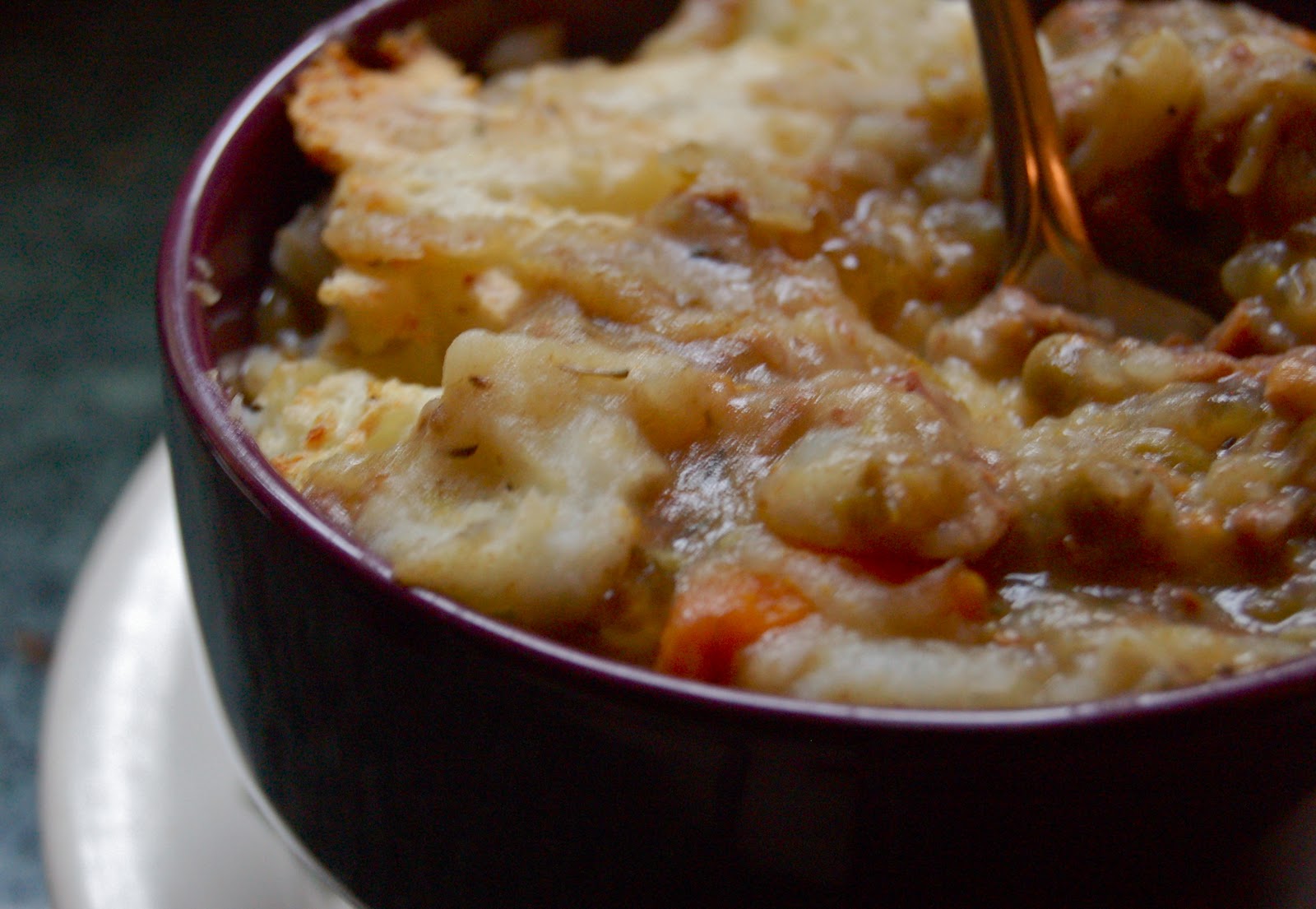
Cottage Pie

Do you ever have those moments where you ended up questioning something, even things in the past you didn’t have control over in the first place? Do you ever think you took the wrong path, whether it is for a career or a college major? My blogging activity waned for five excruciatingly long days, just as my motivation had for school. I kept cooking, and I kept going to school, but when it came time to study the weekly readings or blog my latest recipe, I couldn’t focus, my eyes glazed over, my mind went blank, and all I wanted to do was sleep and hide from the world.


Yesterday all I did was sleep, and I was still exhausted. My inability to sleep more than six hours without the compulsion to get up each night was starting to get to me (zombie-free, thank goodness). I look out from my bedroom window, gazing at the beauty of this clear autumn day, and I can’t help but feel so disconnected from the Cosmos. I don’t feel like I’m part of my own life.

So I’m looking back at my college career, and I think about Steve Jobs and Chris Botti. Both men are geniuses of their respective crafts, Jobs with computers and Botti with his trumpet. Neither one of them completed college (Jobs dropped out and then back “in” college, only taking the classes he found interesting and Botti dropped out to pursue the life of a musician), but look at the impact they’ve made in the world! I started thinking to myself, my minor classes in anthropology were the ones that kept my GPA under a 3.5, and suppose if I decided use those credits to take the classes I found interesting. Where would my GPA be? Where would I be as a person if I took a year off before going to school and traveled? A lot of recent opportunities have come up in the S/CAR program, opportunities that I can’t be part of because this is my last semester as an undergraduate. Maybe this is where it all started, when I found out that future S/CAR majors would have the ability to turn their senior year into their first year of the Masters program. That, and the fact that I still haven’t heard anything about my grades from Sweden transferring, that kept me from filling out my application and, in my mind, hindering my ability to being selected for the upcoming spring.

For the past few weeks I’ve been angry and frustrated and sullen. I was angry because I felt cheated, because I didn’t know what George Mason could have offered me if I hadn’t taken on the anthropology minor. I was frustrated because all the motivation and drive I had was quickly fading, and December was looming closer and closer. And I was sullen, because the only thing that was keeping me from the people that mattered most to me and inhibiting me from doing the things I loved and wanted to do was, well, me.

The nervous breakdown last night, in front of my family and friends, was my turning point. We all get together on a monthly basis to eat, love, meet new people, and discuss new ideas and philosophies. We started talking about the concepts of Wyrd and Ørlög, or fate and its path, as it is known in the Old Anglo-Saxon and Germanic cultures, and despite all my efforts to not break down, the tears fell and I excused myself for the rest of the discussion. It was at that moment I knew I didn’t feel connected to something I felt I should have been, and that my fate and destiny were secrets I wasn’t in on that they might as well not exist. What was I going to do with my life after graduation? What credentials could I possibly have that gave me a doorway to do something great for the world? What was the point of going through higher education when upon graduation I don’t feel prepared for life outside of academia? I am scared, so completely and utterly terrified, and more than once I’ve half-jokingly told people I’m going to become a Buddhist nun just to get away from everything. I began doubting my ability as being a conflict resolution practitioner. I began doubting my ability to cook. I began doubting the things I loved and the things I was good at. I wanted to put the covers over my head and wait until graduation, to not eat or move or talk.

I sat there, petting my uncle’s two dogs while I calmed down, and a couple of people came down to check on me. I told them why I was a blubbering mess with tears in my hair and a heavy heart, spilling out my fears and my reflections. Two of them, brothers and roommates, said they went through the exact same thing before and after they left the military. In fact, most if not all who talked with me said they’re still trying to figure it all out. “Your career doesn’t define you”, my uncle’s girlfriend said, “but that doesn’t mean you won’t end up where you’re supposed to.” I left the get-together in better spirits than I had arrived. I couldn’t have felt more loved or supported, and for that I am grateful for the amazing family I have.

If it hadn’t been for following Mama Dazz’s incentive and looking into conflict resolution as a discipline, I wouldn’t be the person I am today. I learned the art of communication, the power of empathy, and have met the unsung heroes of this wonderful world we have. If it hadn’t been for George Mason or the S/CAR program, I wouldn’t have met the people whom I cherish more than anything, including my colleagues in my classes or the love of my life one fateful Halloween party two years ago. And finally, if I hadn’t been part of this program, I wouldn’t have gone to the conference last year and hear Andy Shallal’s speech that inspired me more than he will ever know.

Thinking about this, now, as I write this post, further reiterates what I’ve always known. Everything is connected. There is no such thing as a coincidence. I’ve been disconnected from the Universe because I’d lost my belief in the process. And when you turn your back on that process and distrust it, you become lost and your way is uncertain. You begin to fear the process, and what it might bring. 


When I was first looking into making shepherd’s pie for the family, put into my single serving Pyrex® dishes, I searched for other people’s recipes before I sought to create my own. Maybe I wanted a point of departure so I wouldn’t mess up something I’ve never made before. Or maybe I wanted to walk down a path already traveled. But then, I noticed none of the recipes were what I was going for. I was afraid to pave my own path, even if it was a recipe for cottage pie (and before you say it, there is a difference between the two recipes).

So, despite my revelation (and a bangin’ original recipe), am I still terrified, frustrated, and sullen? A little. Graduation is still coming up. Midterms are still this week. Morri is still a stressed out, hormonal mess. But you can’t change what has already happened, and you shouldn’t worry about the things you can’t control. Sometimes what other people have done before you isn’t exactly what you want to do. And there may be a better way to do what you have in mind.

Everything happens for a reason. Trust in the process. Believe in your fate and that path your fate is taking. So here, have some cottage pie for your journey. I guarantee you’ll feel better.

Cottage Pie

1.5 lbs Lean beef stew meat, chopped into bite-sized chunks
2 carrots (about 5.5 oz), peeled, quartered, and finely chopped
1 White onion (medium), peeled and finely chopped
5.25 oz Petite peas, fresh or frozen
3 tbsp. Olive oil
2 Garlic cloves, coarsely chopped
20 oz Water
1 tsp. Unrefined apple cider vinegar
1 Bay leaf
1 tsp. Thyme
1/4 tsp. Rosemary powder
1/4 tsp. Sage powder
1 tsp. Sea salt
1/2 tsp. Cracked pepper
3 (heaping) tbsp. Potato starch

4 Russet potatoes (about 2.5 lbs), cut into small chunks
2 Garlic cloves, whole
1 oz Salted butter
3 oz Sour cream
1/4 tsp. Sea salt
1/4 tsp. Cracked pepper

In a pressure cooker or large pot, combine the beef, veggies, water, and spices (sans the potato starch, and cook for at least an hour.
Preheat the oven to 350ºF.
Cover the potato chunks and garlic cloves with cold water in a medium saucepan and bring to a boil on medium-high heat until tender.
Drain the water and add the butter, sour cream, salt, and pepper, and mash the potatoes until there is a smooth consistency.
When the pressure has subsided in the pressure cooker, create a slurry with the potato starch (about 2 oz water) and add in with the meat and veggies on medium-low heat.
Once the stew thickens, turn off the heat, remove the bay leaf, and pour it into an oven-safe casserole pan.
Top it with the potato mixture and evenly spread it out.
Bake for thirty minutes or more if you want the potato to brown.

Serves 4 – 6 people.

Wednesday, May 4, 2011

Yerba Mate Chai Scones

(For the revised version of this recipe, click here.)

This morning reflected how I felt in a nutshell. It was rainy, cold, with a wind that chilled me down to my rain boots. George Mason is halfway through its last "official" week for the semester before finals. (I say "official" because some classes are making up for their snow days next week as well as finals.) People were literally dragging themselves to class, faculty members and students alike. There are final projects and papers to turn in, exams to study for, student organizations to finalize, internships to prepare for.


I’m not even graduating this semester and I feel slightly overwhelmed with it all.

The weather cleared up by the early afternoon, but the lethargy still remained. I wanted something to chase away the cold and uncertainty. I wanted warmth. I wanted comfort.

There are two things that do this: time and baking. That’s where this month’s Gluten-Free Ratio Rally comes in.


For some reason, I seem to miss the submission deadline for each challenge; that, and I am often confused as to who I’m supposed to talk to. Melanie from Mindful Food has been such a great help, sending me to the right people, simply being awesome... you know, the usual. I finally touched base with Erin from The Sensitive Epicure, to sign up for future rallies, and Lauren from Celiac Teen, the cutie patootie who is hosting the rally this month.

I like Lauren for quite a few reasons: one, she is simply adorable; two, she is an amazing blog writer and cook; and three, she thinks outside the box. I’ve been a huge fan of her blog for some time, marveling in the honesty and compassion for every word (and recipe) she writes.

There should be more Lauren’s in the world, but this particular Lauren challenged the rally to make scones.

Since this morning I kept thinking what type of scone I should make for the rally. I wanted this to be the recipe that proved my worth in the gluten-free community, where other bloggers for the cause would come out of the woodwork and say hello. It had to be perfect. It had to be unique. And with all the wonderful ideas I could come up with and proposed by friends, there was still one problem.

I had no idea how to make a scone


Like biscuits, scones are a relatively foreign concept to me. I’ve seen them in bakeries, cafés, and in stores, but they were so different from each other that making a batch of my own was terrifying. Were they like biscuits in texture or taste? Did they have to be cut in a certain way, and if so, was it in triangles or rounds? What size should they be? What should the dough feel like?

As I started to calm down and really think about it, I decided that regardless of the outcome, I would learn something. Even if I was too late to be part of this month’s rally, at least I got in contact with the right people for future fun. I then came up with my scone recipe and, like the bisckies before them, played by ear until it felt right.

That’s how you know a recipe is a keeper: it feels right.

The original recipe ratio called for 6 parts flour, 2.5 parts shortening, 1 part egg, and 3 parts milk. As time went on, however, I felt that the recipe called for 7 parts flour to make a better forming dough.

I looked down at the dough in my mixer, thinking that it should be 8 parts flour, and I paused. The dough was still rather sticky at this point and I was slightly concerned, yet I didn’t want to continue adding flour to the point the dough was pliable but the scones were dry and crumbling. I then remembered what Shauna from Gluten Free Girl and the Chef wrote, about how gluten free batters and doughs are different. If I wanted the scones to turn out as I wanted, I had to be patient. So I let the dough sit for ten minutes and, sure enough, the dough was still tacky but easy to shape.

Lesson learned: time makes all the difference in the world.

Now, this recipe really brought out the mad scientist in me. Why? Well, I was particularly creative in what I used, especially since I was low on one or more flours and was out of butter. I didn’t want to add anything into the scones (such as berries or cheese) as separate entities from the crumb. I wanted the scone itself to be the main event, one that was delectable for both sweet and savory dishes, perfectly paired with a cup of Joe or a chai latte.

The result was a scone that was dairy free, had ten flours used, a combination of fresh avocado and coconut oil for the fat, and highly concentrated yerba mate tea with coconut milk for the liquid. The crust was sturdy and the inside crumb was so moist and creamy from the avocado. I truly believe I found the balance for future baking where fat is needed. All this delicious concoction* needs is a little honey smeared on top for your taste buds to do the happy dance. 


Yerba Mate Chai Scones

2 oz Glutinous Rice* Flour (I ran out and ended up using 0.1 oz Rice flour to compensate)
2 oz Millet flour
2 oz Amaranth flour
3 oz Arrowroot* starch (I also had to use 0.1 oz Rice flour because I ran out)
1 oz Quinoa flour
1 oz Coconut flour
1 oz Buckwheat flour
1 oz Rolled oats (Certified Gluten-free, of course)
1 oz Almond meal
2.5 oz Avocado (about 3/4 of a medium-sized avocado)
2.5 oz Coconut oil, room temperature
2 oz So Delicious unsweetened coconut milk
4 oz Yerba mate tea, concentrated
2 tsp. Baking powder
1/2 tsp. Cinnamon
1/4 tsp. Nutmeg
1/4 tsp. Sea salt

Preheat the oven to 400ºF.
In a medium-sized mixing bowl, combine the flours, baking powder, cinnamon, nutmeg, and salt.
Put the avocado, coconut oil, egg, coconut milk, and yerba mate into a blender on low until there is an even consistency.
Using an electrical mixer (or by hand), combine the wet and dry ingredients until the dough forms.
Let the dough sit for about 15 minutes until it becomes tacky yet still can be touched (this is crucial if you don’t want a sticky dough to work with).
On a baking sheet lined with parchment paper (or greased), form the dough into a flat circle or rectangle shape (I wanted smaller servings, so I used the rectangle shape).
With a knife, cut triangles into the dough so that individual pieces will be easier to slice (I was able to make 12).
Shimmy a thin layer of cinnamon on top of the dough and bake for 20 – 25 minutes.

Makes 8 – 12 scones.


Here's a list of the other participants so far:

Amie Valpone | The Healthy Apple  Chocolate Chip n' Rice Crispy 'Muffin' Scones  
Britt | GF in the City   Blueberry Buttermilk Scones   
Brooke | B & the boy!   Coconut Scones with Pineapple Curd
Caleigh | Gluten-Free[k]    Jam on top, or cream on top? Scones
Caneel | Mama Me Gluten Free    Savory Jalapeno Cheese Scones   
Caroline Shannon-Karasik  | The G-Spot    Carrot Raisin Scones with a Cinnamon Glaze   
Charissa | Zest Bakery    Amaretto Soaked Cherry and Almond Scones   
Claire | Gluten Freedom    Strawberry Banana Scones
Erin Swing | The Sensitive Epicure    Millet Scones   
Gretchen | kumquat    Maple Oat Nut scones   
Irvin | Eat the Love  Green Garlic, Bacon, and Thyme Scones
Jeannette  |  Jeannette's Healthy Living   Coconut Pineapple Scones (Vegan)
Jenn | Jenn Cuisine    Apple Banana and Currant Scones   
Karen | Cooking Gluten-Free   Oat Scones with Currants
Kate | Katealice Cookbook   Cinnamon Fruit Scones 
Lauren | Celiac Teen Gluten-free Multigrain Cream Scones
Lisa | Gluten Free Canteen   Bisconies, actually
Lisa Thiele | With Style and Grace    Lavender and Earl Grey Lemon Scones   
Marla Meridith - Family Fresh Cooking    Avocado Scones
Meaghan | The Wicked Good Vegan  Simple Scones with Clotted Cream and Strawberry Jam (Vegan)  
Melanie | Mindful Food  Hazelnut Cream Scones with Blackberry Jam (Vegan) 
Pete and Kelli | No Gluten, No Problem    Mesquite Scones   
Mrs. R | Honey From Flinty Rocks    Classic Cream Scones - Gluten & Dairy Free 
Mrs. R | Honey From Flinty Rocks    Almond Fig Scones - Gluten & Dairy Free 
Sea | Book of Yum    Classic British Currant Scones (Dairy free)   
Shauna | Gluten Free Girl and the Chef   Gluten Free Scones
Silvana Nardone | Silvana's Kitchen    Gluten-Free Pecan Streusel Scones   
T.R. | No One Likes Crumbley Cookies    Cinnamon Pecan Scones
Tara Barker | A Baking Life    Crystalized Ginger Cream Scones   
Wendy | La Phem Phoodie  Red Velvet Scones
Winnie | Healthy Green Kitchen  Coconut Raisin Scones (Vegan)

*Note: As much as I think these scones turned out rather deliciously, I will work on perfecting how it tastes, looks, and forms. I think I will add something sweet to it next time as well as using butter for the fat.